


Identifying key sites for biodiversity in the coldest places on Earth: 106 new KBAs confirmed in Antarctica and the High Seas in the latest update of the WDKBA
16,634 sites –including 106 new sites in Antarctica and the High Seas–and a total of 17,740 qualifying species are some of the key highlights of the latest update of the World Database of Key Biodiversity Areas (WDKBA).
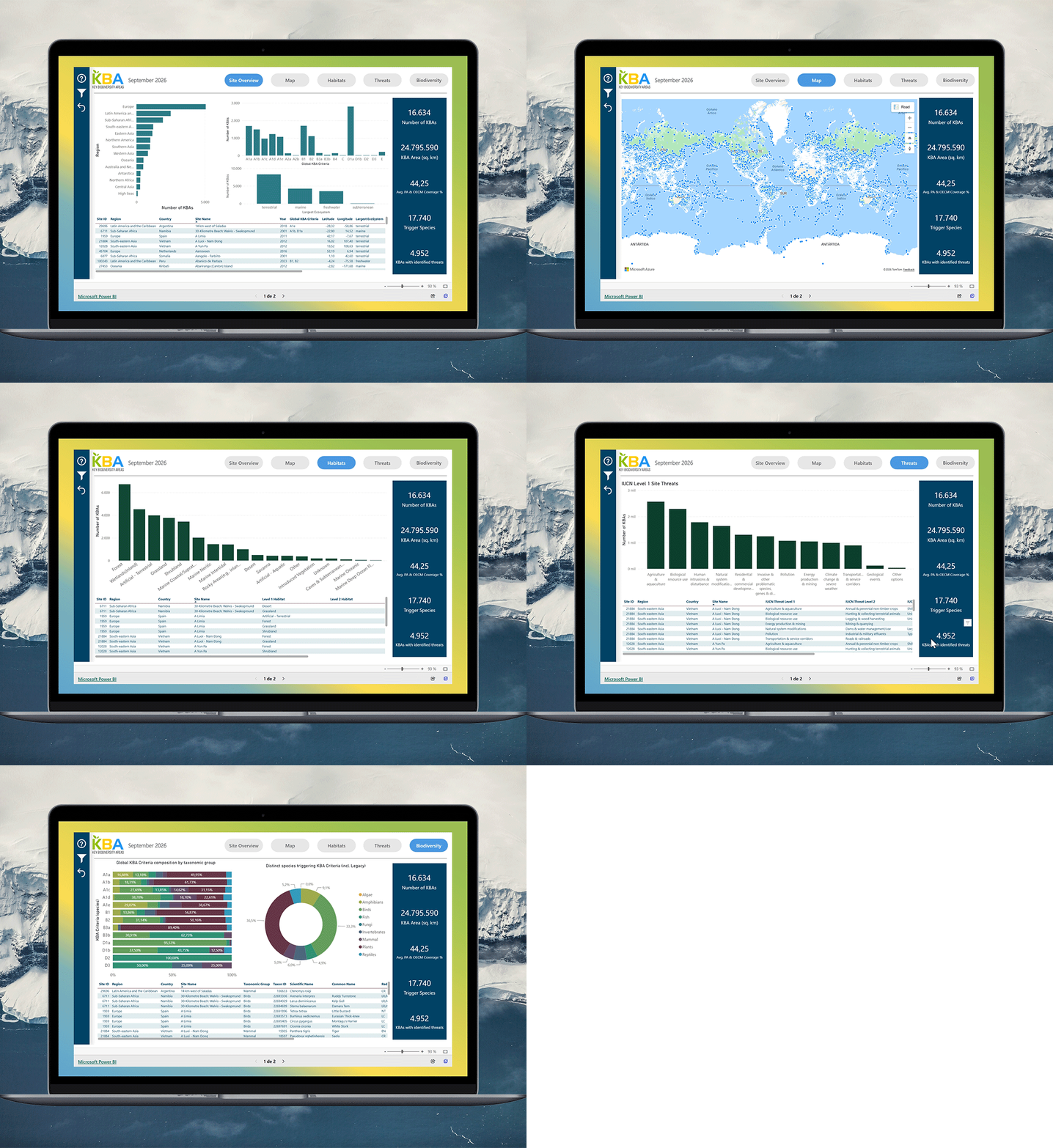
The latest update of the World Database of Key Biodiversity Areas WDKBA is now live an available through the KBA Dashboard. As of September 2026, the number of sites is a staggering 16,634 KBAs, including 168 brand new sites, among them 106 confirmed for Antarctica and the High Seas, territories that host abundant seabird and marine mammal populations.
The identification and nomination of these sites was possible after years of satellite biodiversity tracking that enabled experts to compile data from more than 2,000 individual animals, 37 species in total, including 33 seabirds and 4 pinniped (seal) species. From all these species, 27 met the KBA criteria and helped confirm sites as the most important for biodiversity. Among the qualifying bird species are the Nearly Threatened (NT) Emperor Penguin and the Endangered (EN) Grey-headed Albatross, and the three qualifying mammals are the Vulnerable (VU) Southern Elephant Seal and the Least Concern (LC) Crabeater Seal and Weddell Seal.

Emperor Penguin © Aleksandr Levon
Beyond the Antarctic Seas
At the global scale, 624 previously existing KBAs were reassessed, providing up-to-date data about sites from all regions, crucial for conservation-related decision-making. Also, 2 sites—South Saskatchewan River (Empress to Lancer Ferry) in Canada and East Kadavu Passage in Fiji—were superseded, and 62 legacy sites were delisted as KBAs. The boundaries of a further 192 coastal sites were improved by correcting their alignment to protected areas, habitats or other topography as appropriate and in consultation with the original proposers.
Biodiversity updates

In terms of biodiversity, a total of 17,740 species activated KBA Criteria, with plants as the most numerous group with 6,465 species, representing 36.5% of the total of qualifying species. They are followed by birds and amphibians, with 5,912 and 1,608 qualifying species, respectively. The remaining species are invertebrates (1,602), reptiles (926), mammals (879) and fish (876).
New sites to expand KBA national networks
The 168 new sites in this update reflect the work and efforts to expand national KBA networks in 7 countries across various regions: Antarctica, Australia, Canada, Guinea-Bissau, High Seas, Mozambique, and Zimbabwe. Other 38 countries also worked actively to reassess existing sites to ensure the latest information is available for decision-making and conservation planning.
KBA monitoring
Since August 2026, the functionality to monitor KBAs is available in the WDKBA. The functionality is based on a State–Pressure–Response protocol that was developed to help the KBA Partnership track what is happening inside KBAs over time. The goal is to make monitoring more consistent, accessible, and useful for decision-making across the world’s KBAs.