


From Monitoring to Conservation Action: How ASCET is Strengthening the Protection of Africa's Key Biodiversity Areas
Author: Fred Barasa, IBA/KBA Officer BirdLife International Africa
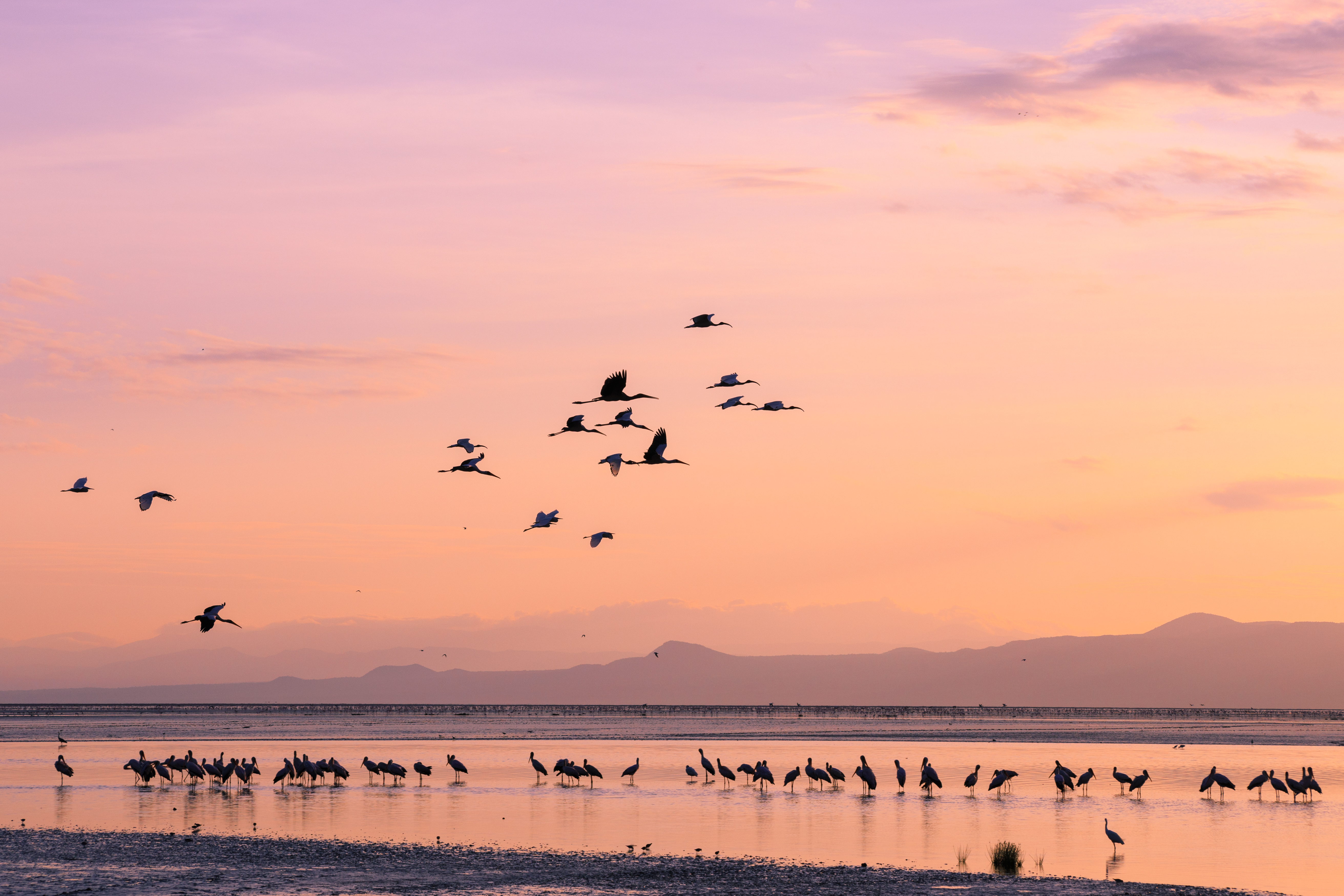
Across Africa, biodiversity faces unprecedented pressure from infrastructure expansion, mining, oil and gas exploration, renewable energy developments, agricultural expansion, urbanisation, pollution, invasive species and climate change. Many of these developments occur within or adjacent to sites that are internationally recognised for their biodiversity importance.
BirdLife International's network of Important Bird and Biodiversity Areas (IBAs) and Key Biodiversity Areas (KBAs) represents some of the continent's most significant places for birds and other biodiversity. However, identifying these sites is only the beginning. Their long-term conservation depends on continuous monitoring, timely detection of emerging threats, and coordinated responses that influence decisions before irreversible damage occurs.
The African Sites Casework on Emerging Threats Taskforce (ASCET) was established to help achieve exactly that. Celebrating 15 years of dedicated site casework advocacy and learning since its founding in 2010, ASCET has successfully stopped or slowed down damaging development threats at more than 35 major sites across Africa, protecting 79,889 km² of critical habitats.
Since its establishment, ASCET has provided a continent-wide mechanism for transforming scientific monitoring into practical conservation action. By bringing together BirdLife Partners across Africa, the BirdLife Global Team, and supporting Partners, ASCET has ensured that evidence gathered from site monitoring informs advocacy, policy engagement, legal interventions, and conservation planning. In many respects, monitoring has provided the evidence, while ASCET has delivered the response.
The BirdLife IBA/KBA Programme has, for over four decades, identified and documented the world's most important sites for bird conservation. More recently, the development of the Global KBA Standard expanded this approach to include all taxonomic groups and ecosystems, ensuring that sites important for biodiversity receive global recognition.
Many IBAs and KBAs continue to experience increasing pressure from competing land uses and development interests. Roads, ports, dams, transmission lines, mining concessions, wind farms and agricultural schemes often overlap with critical biodiversity areas.
Conservation therefore depends on an adaptive management approach that combines: Site identification, monitoring, threat assessment, conservation action, policy engagement and long-term management. ASCET has become a key component of this adaptive management cycle.
BirdLife Partners routinely monitor IBAs and KBAs using standardised monitoring protocols. The purpose is simple: determine whether the biodiversity values for which a site was identified are being maintained.
Monitoring focuses on three interconnected components: state; which looks at how biodiversity is changing. This includes population trends of trigger species and habitat quality; pressure-looking at what threats are affecting the site and responses which look at the conservation actions being undertaken, like the advocacy campaigns. Together, these indicators provide a comprehensive picture of whether conservation efforts are succeeding.
Thus, ASCET provides a structured forum where Partners can present evidence of emerging threats affecting priority IBAs and KBAs. Members collectively assess: the severity of threats, urgency of intervention, available scientific evidence, relevant policy mechanisms, advocacy opportunities and potential conservation partners.
The Taskforce then helps coordinate responses at national, regional or international levels. Rather than individual Partners responding independently, ASCET creates a coordinated, science-based approach that draws upon expertise from across the BirdLife Partnership.
What does site casework involve
Site Casework refers to coordinated advocacy undertaken to address threats affecting IBAs and KBAs. Depending on the nature of the threat, casework may involve reviewing Environmental and Social Impact Assessments; preparing scientific submissions; engaging government agencies; advising project developers; influencing financial institutions; supporting legal processes; engaging Multilateral Environmental Agreements; preparing technical briefs; public communication and media engagement and facilitating dialogue among stakeholders.
Importantly, ASCET seeks solutions that balance sustainable development with biodiversity conservation. The objective is not to oppose development, but to ensure that development avoids, minimises or adequately mitigates impacts on globally important biodiversity.
Case Studies: Lake Natron, Tanzania and Dakatcha Woodland, Kenya
Lake Natron supports approximately 75% of the world's breeding population of the Lesser Flamingo. Monitoring revealed that proposed soda ash extraction posed serious risks to breeding habitats. BirdLife Partners used long-term ecological evidence to demonstrate these risks and coordinated advocacy with national and international organisations. The proposal attracted significant international attention and ultimately did not proceed, demonstrating the value of science-based advocacy supported by monitoring.

Monitoring undertaken by Nature Kenya documented the importance of Dakatcha Woodland for globally threatened species including Clarke's Weaver and Sokoke Pipit. When large-scale biofuel developments threatened the area, monitoring data became the foundation for national advocacy. The resulting engagement helped prevent extensive habitat loss while increasing recognition of the site's conservation importance.

As BirdLife continues expanding the IBA and KBA Programme across Africa, the integration of monitoring and casework will become increasingly important. Ultimately, conservation is not measured by how much information we collect. It is measured by whether that information changes decisions, influences policy, prevents habitat loss and safeguards biodiversity.
For over fifteen years, ASCET has demonstrated that when robust monitoring is combined with coordinated advocacy, scientific evidence becomes one of the most powerful tools for conserving Africa's most important places for nature.
Thus, the future of the IBA/KBA Programme lies not only in identifying sites of global significance, but in ensuring that every monitoring observation has the potential to trigger timely, coordinated and effective conservation action. In this regard, ASCET stands as a vital bridge between science and action, helping transform knowledge into lasting protection for Africa's biodiversity.