


From monitoring to conservation: two updated KBAs for the last valleys of the Arica Hummingbird
Author: Chilean Network of Bird and Wildlife Observers (ROC)
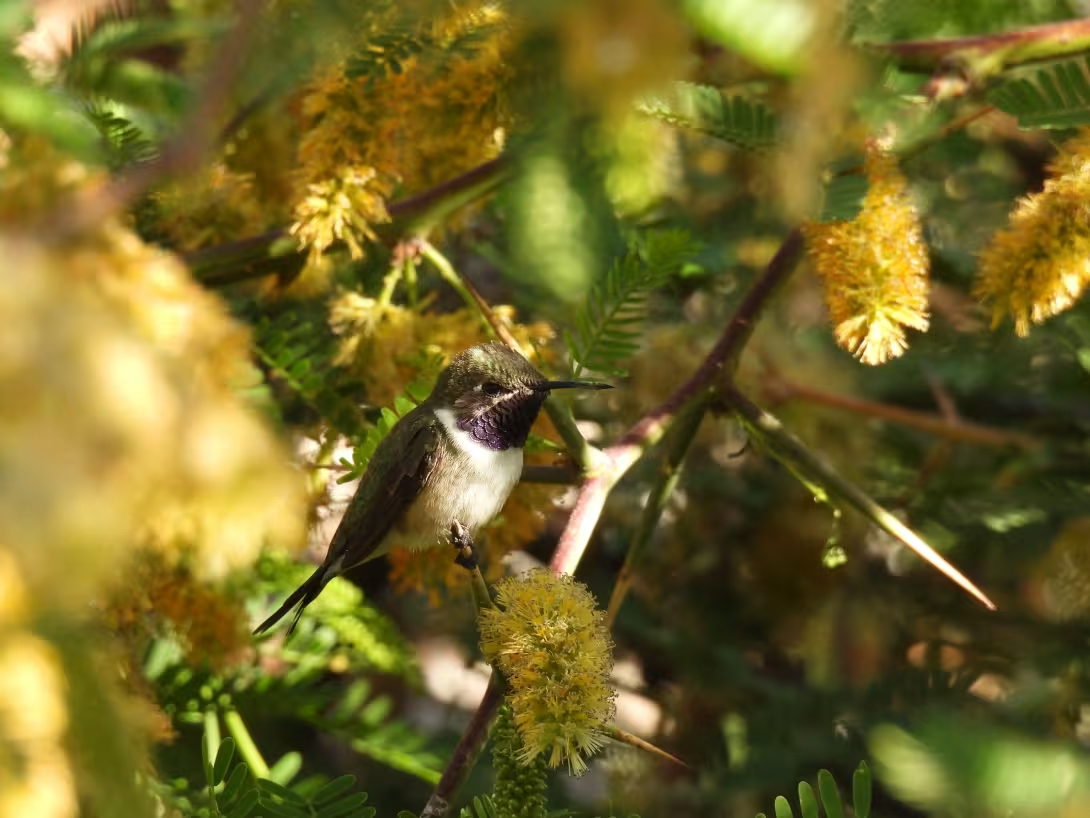
The Arica Hummingbird (Eulidia yarrellii) is the smallest bird in Chile. Declared a Natural Monument and the symbol of the Arica commune, it is classified as Critically Endangered both nationally and internationally. Although it was common in the Arica and Parinacota valleys a few decades ago, its population has experienced a marked decline. According to censuses conducted by AvesChile since 2003, the species has decreased from approximately 1,500 individuals to an estimated 434 in 2024. This decline is closely related to habitat loss, particularly in the Azapa Valley, which historically harbored the largest population and where the species is now considered locally extinct. Thus, the Arica Hummingbird is now restricted to areas of the Vítor and Camarones valleys, where the conservation of remaining vegetation and breeding sites is essential to prevent further population decline.
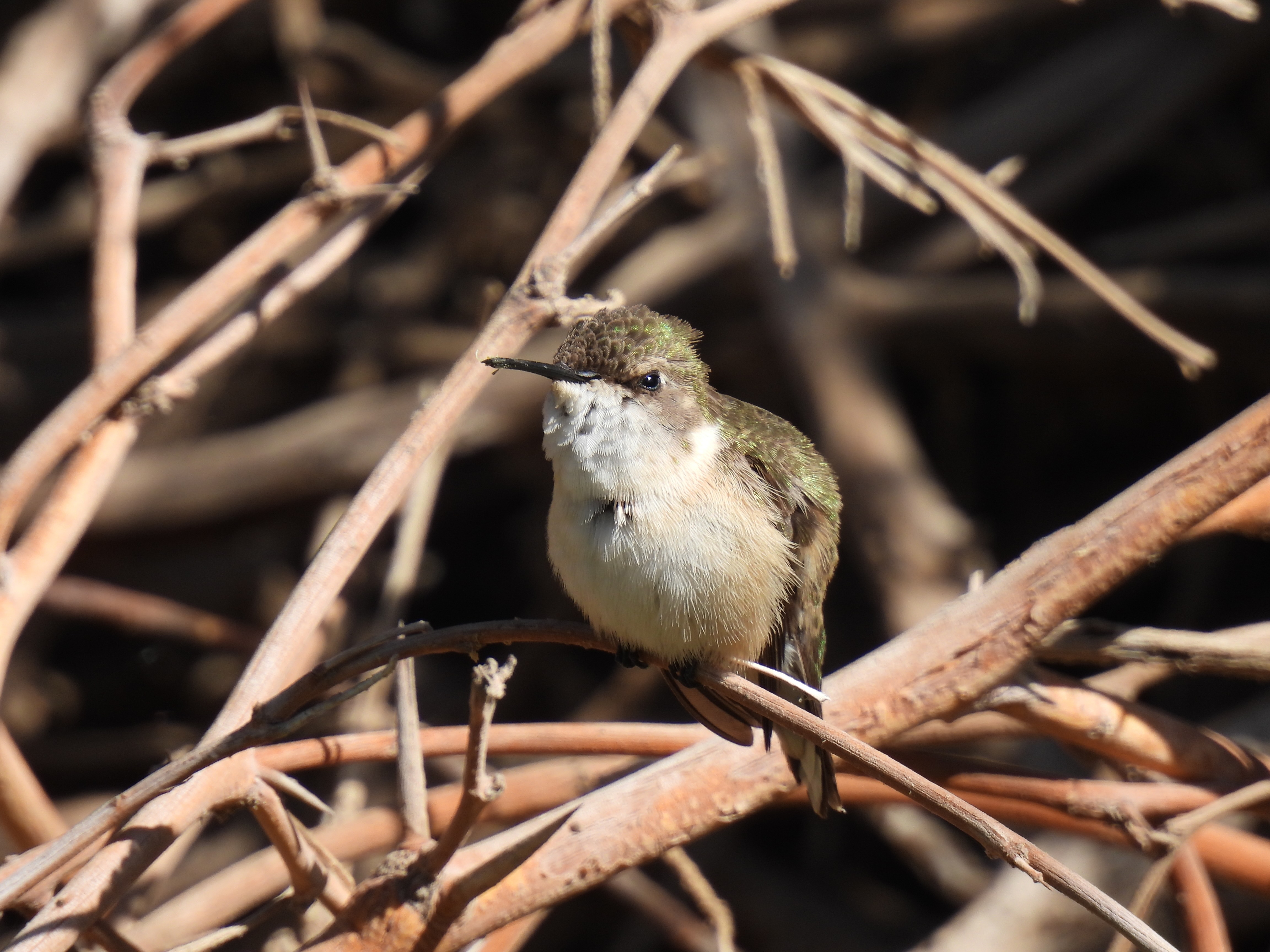
Female Arica Hummingbird © Ronny Peredo
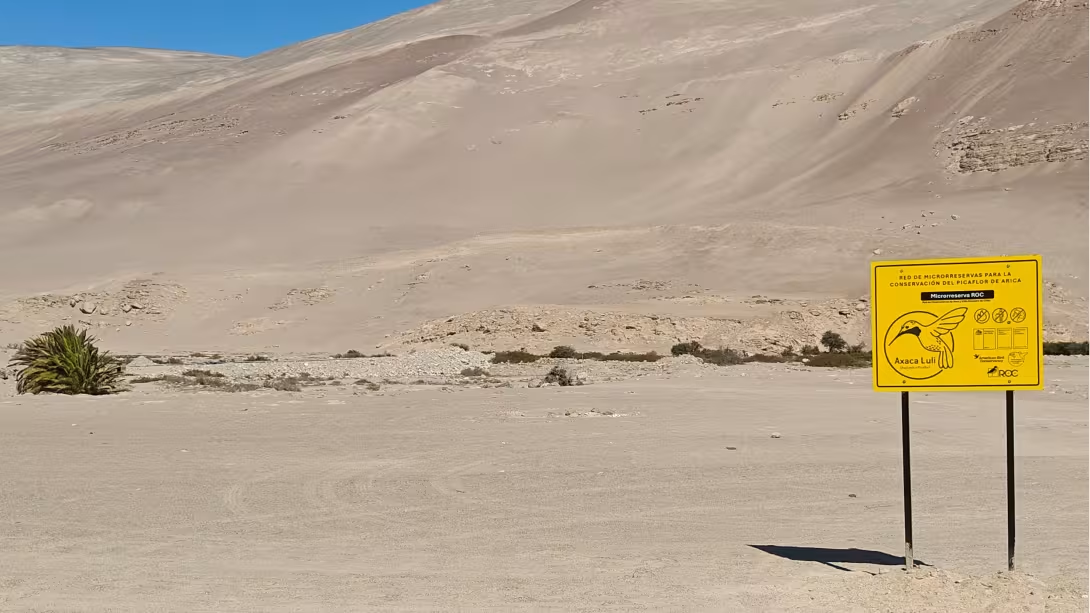
The guiding framework for the conservation of this species is the Recovery, Conservation, and Management Plan (RECOGE), published in 2022, with twelve lines of action. Within this framework, various organizations have promoted initiatives to protect and restore its habitat. AvesChile, for example, spearheaded the first protected area for the hummingbird—the Arica Hummingbird Natural Monument, with more than 10 hectares managed by CONAF (National Forestry Corporation). Subsequently, a GEF (Global Endowment for Climate and Energy) project for threatened species enabled the establishment of five additional micro-reserves between 2017 and 2022.
These initiatives are complemented by the work of the Chilean Network of Bird and Wildlife Observers (ROC), which recently requested the Ministry of National Assets to grant a concession of 15 hectares in the Vítor Valley, with the aim of expanding this network of micro-reserves.
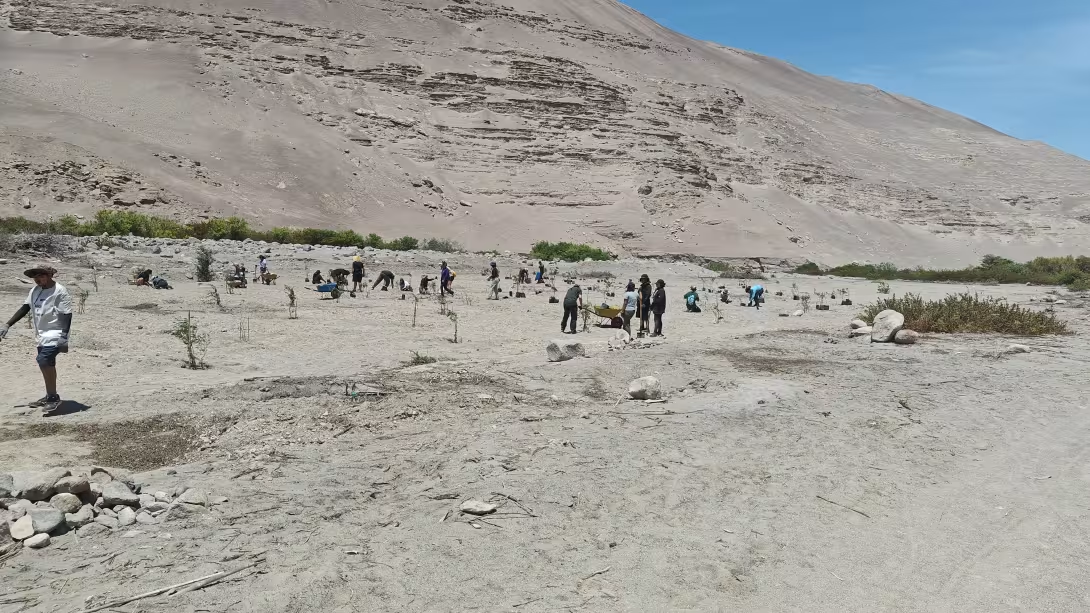
Along the same lines, the ROC is currently working on the conservation and restoration of the Arica Hummingbird's habitat in the Vítor micro-reserve. As part of this process, a management plan is being developed following the Open Standards for Conservation. The conservation targets have already been preliminarily defined, the territory has been characterized, and an initial workshop was held with public services and local stakeholders, thus moving towards coordinated site management. Additionally, habitat restoration is progressing within the micro-reserve, with the planting of approximately 2,000 native flora specimens, including tree species in conservation categories such as the tamarugo (Prosopis tamarugo), the carza (Haplorhus peruviana), and the pacama (Morrella pavonis), with the participation of the local community.
In this context, accurately delimiting the areas where the Arica Hummingbird still survives is crucial. Therefore, to expand the network of micro-reserves, support applications for public lands, and/or seek funding to acquire private properties, it was proposed to update Key Biodiversity Areas (KBAs) located within the species' distribution area.
Upon reviewing the overlap between the species' current distribution and the network of Key Biodiversity Areas, it was found that three KBAs existed in these valleys, but none had been identified for the presence of the hummingbird. These were legacy sites from the Important Bird Areas (IBA) program, originally designated for other species and lacking confirmed criteria under the Global Standard. One of them, Codpa Valley, had even been delisted. The two remaining KBAs covered only limited portions of the valleys. The Arica hummingbird, however, was listed in a fourth KBA: Azapa Valley, another legacy IBA site covering 2,091 km² that remains outdated. This is precisely the valley where the species is now considered locally extinct.
The result was paradoxical: on the map, Chile's most threatened bird appeared associated with the only place where it is no longer found, and not with the two valleys where it still survives.
This situation highlighted the need to update the boundaries of these sites to reflect the species' current distribution and the territories where its main breeding populations are concentrated. The question then became whether the available information demonstrated that Vítor and Camarones met the criteria to be recognized as Key Biodiversity Areas due to the presence of the Arica Hummingbird.
The answer lay in the data accumulated over years of monitoring. The process of updating the KBAs that overlapped with their distribution relied on information gathered by AvesChile during its annual monitoring efforts. The shared database contained georeferenced records of nests and leks between 2021 and 2024, along with the type of ownership—public or private—of each record. This information was supplemented with records of the species available on eBird between 2020 and 2025.
Thanks to this dataset, it was possible to evaluate both sites using the number of mature individuals as a parameter. For this purpose, the abundance estimate provided by AvesChile for each valley was used as a base and converted to mature individuals by applying an approximate ratio of 1.5 total individuals per mature individual. In the Camarones Valley, an estimated 199 individuals were counted, with a range of 108 to 380, equivalent to 133 mature individuals. In the Vítor Ravine, the estimate was 235 individuals, with a range of 138 to 384, equivalent to approximately 157 mature individuals. This is supplemented by documented reproductive evidence between 2021 and 2024: eight leks and nine confirmed nests in Camarones, and seven leks and five nests in Vítor1.
To interpret these records, it is important to consider that males establish reproductive territories— leks —associated with foraging sites, and after mating, females build their nests independently. Each lek corresponds to a reproductive unit, and each confirmed nest indicates at least one additional reproductive female. Thus, the minimum number of reproductive units is 17 in Valle de Camarones and 12 in Quebrada de Vítor.
When comparing the estimates for each site with the current global estimate of mature individuals, Valle de Camarones contains 63.3% of the population and Quebrada de Vítor 74.76%. The fact that both figures together exceed 100% reflects that the most recent counts carried out in the valleys surpass the available global reference and demonstrates the high degree of concentration of the known population in these two territories.
Abundance and reproduction data confirmed the importance of both valleys for the species. Based on this information, both sites meet criterion A1a, for harboring a substantial fraction of the global population of a Critically Endangered species, and criterion B1, associated with a geographically restricted distribution, exceeding the required reproductive unit thresholds in both cases.
Once the importance of both sites was confirmed, the next step was to revise their boundaries to more accurately represent the habitat used by the Arica Hummingbird. The common principle was to extend the sites following the vegetation occupied by the species and exclude areas that do not correspond to its habitat. In this way, the new polygons aim to better reflect the hummingbird's actual distribution and, at the same time, facilitate more precise land management.
In the case of the Camarones Valley (formerly the Cuya sector of the Camarones Valley), the boundaries were correctly defined, but they only encompassed a portion of the valley near the coast and, therefore, a smaller part of the species' distribution. Extending the boundaries upstream, following the available habitat, increased its area from 2.8 to 25 km². The same criteria were applied to the Quebrada de Vítor (formerly the Chaca Valley). The new polygon incorporated the area corresponding to the delisted Codpa Valley at its upper end, but its final area decreased from 66.9 to 11.6 km². This reduction does not represent a loss of priority habitat, as the previous polygon was thick and included a significant portion of slopes and grasslands without vegetation, while the new boundaries more precisely reflect the areas where habitat for the species actually exists.
To define the new boundaries, relevant management elements were also considered. These included the boundaries of existing micro-reserves, ensuring their full incorporation, and a significant portion of the valley's agricultural lands. These latter areas represent spaces where it is possible to work towards coexistence between production and conservation and which, in the future, could become areas of interest for expanding the micro-reserve network.
The updated Key Biodiversity Areas have concrete consequences for the conservation of the Arica hummingbird. The entire network of micro-reserves is now included within the KBAs, aligning existing management practices with international priorities. Furthermore, by cross-referencing the records with the type of land ownership, it is possible to identify where to request state-owned land from the government and where funding is needed to acquire private properties or establish conservation mechanisms.
For the ROC, the recognition of these two sites as Key Biodiversity Areas represents a new opportunity to strengthen the conservation of a species that today depends on an increasingly smaller and more fragmented territory. While monitoring allows us to understand where and how the Arica hummingbird persists, the protection and restoration of these valleys is key to ensuring that these last refuges can remain part of its future.
1 AvesChile (2024). Population estimate of the Arica hummingbird for the 2022, 2023, and 2024 seasons and implementation of actions of the RECOGE plan for the Arica hummingbird, Arica and Parinacota Region. Ministry of the Environment, Exempt Resolution 1093.