


Monitoring KBAs for Long-Term Conservation: The new KBA Monitoring Platform is now available on the WDKBA
To date, more than 16,600 Key Biodiversity Areas (KBAs) have been identified worldwide. The efforts to pinpoint these significant sites have been paramount, but identification is only the first step. Monitoring the status of qualifying species and ecosystems within KBAs, along with the pressures they face, is crucial for maintaining these sites as vital places for biodiversity persistence. Regular monitoring facilitates an assessment of the effectiveness of conservation measures over time and helps identify priority sites for action, prioritise conservation actions within them, and determine the effectiveness of any interventions.
Functionality to monitor KBAs is now available in the World Database of Key Biodiversity Areas (WDKBA). It is based on a State–Pressure–Response protocol that was developed to help the KBA Partnership track what is happening inside KBAs over time. The goal is to make monitoring more consistent, more accessible, and more useful for decision-making across the world’s KBAs.
This functionality allows you to track changes in state (the status of the qualifying (also referred to as trigger) species and ecosystems) at the site, pressure (the threats and the extent to which they affect these species or ecosystems), and response (an evaluation of the conservation measures that are in place).
How it works
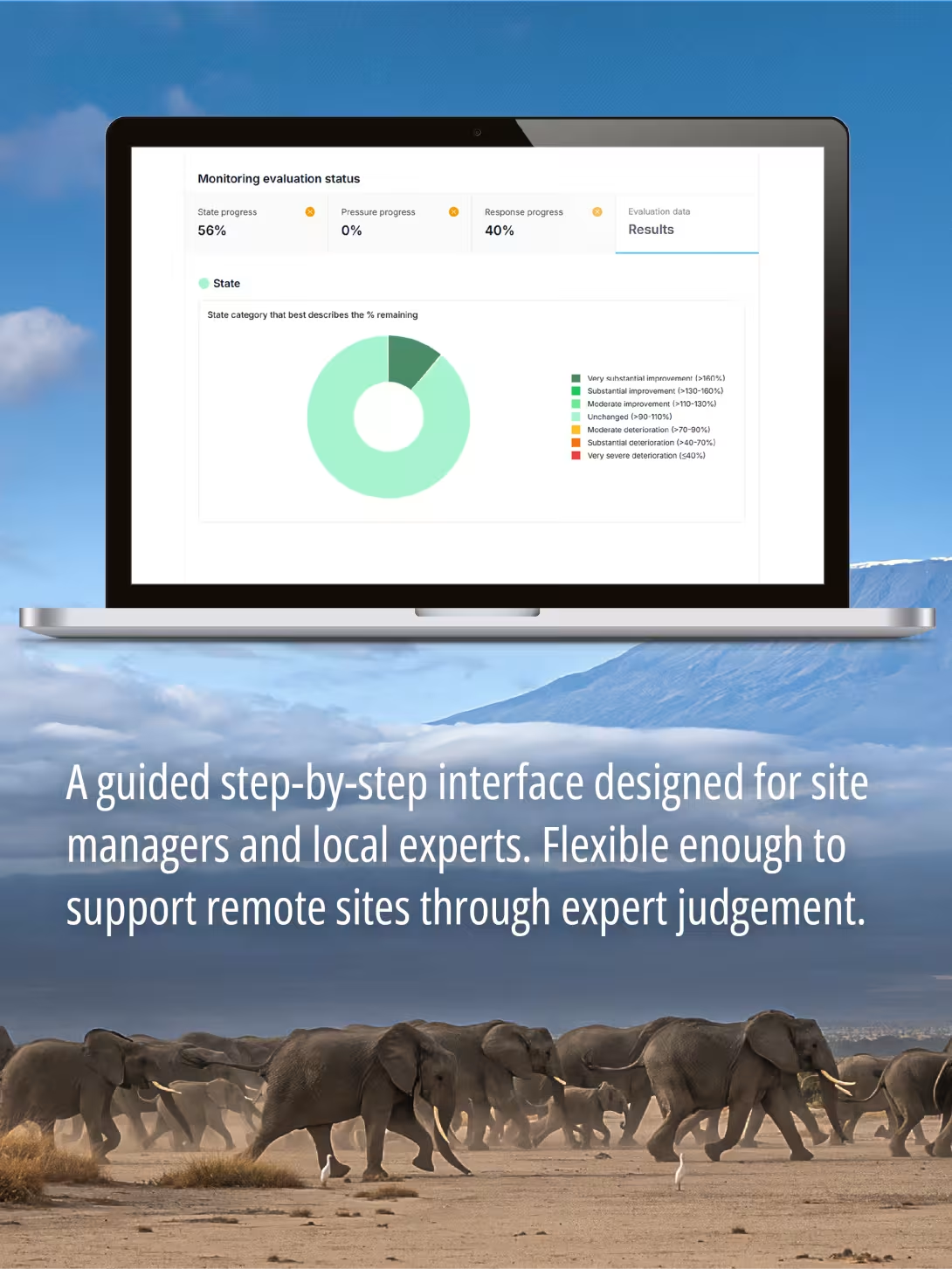
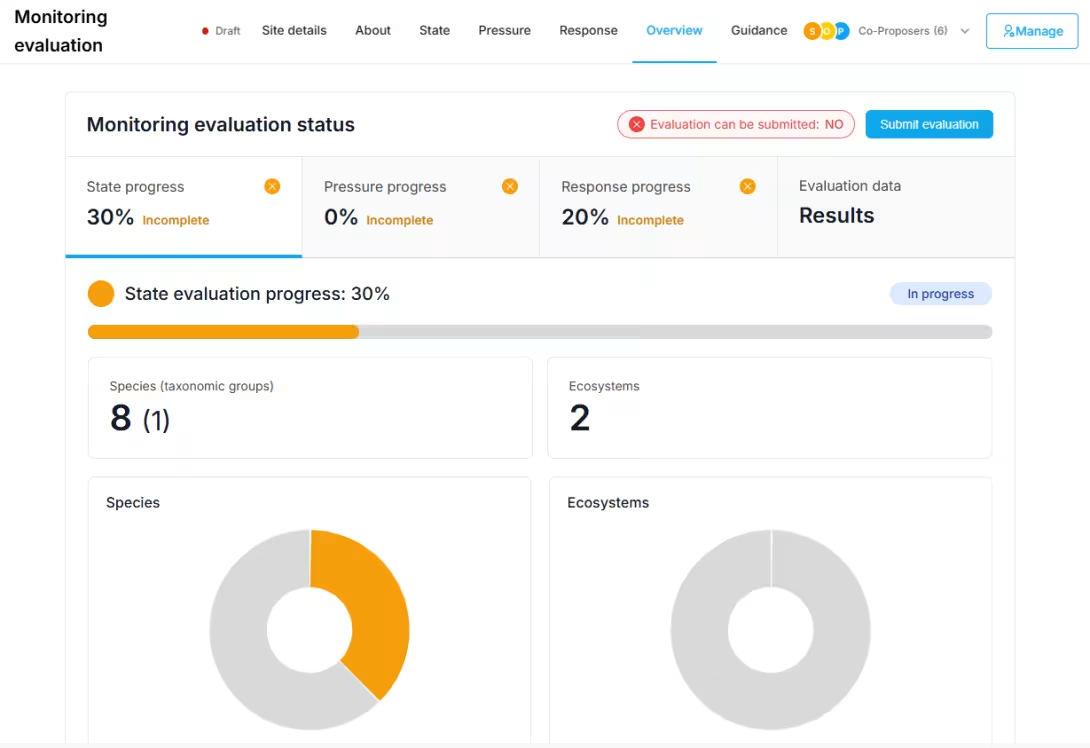
The monitoring features are available at the site level in the WDKBA. Monitoring evaluations are intended to happen every four years, with assessors encouraged to collaborate locally and draw on the best available evidence to provide a snapshot in time of what is happening at the site. There is flexibility within the system to support evaluations in sites where the availability information is limited (e.g. remote or understudied areas) and expert judgment may be needed. The platform guides users through the evaluations step by step providing summaries along the way. This structure makes it possible to compare results across sites and over time while still allowing flexibility for very different kinds of KBAs.
What it captures
For state, the platform looks at whether species populations, ecosystem extent, or condition have improved, stayed stable, or declined relative to a baseline. For pressure, it records threats using the IUCN threat classification scheme and asks assessors to judge their timing, scope, severity, and overall impact. For response, it records protected area or OECM coverage, management planning, and conservation action, including whether actions are underway and what others may be needed.
Data sources and support
A major strength of the platform is its ability to draw on information available from other global datasets. The platform enables access to KBA-relevant metrics from datasets such as forest loss, burned areas, precipitation, night lights, human densities, infrastructure, among others, with links to data available on citizen science platforms (eBird). It’s important to note that though information can be drawn from external datasets, the platform will not fully automate the monitoring process, because ecological context is important and interpretation about the relevance of these datasets is needed from people who know about the site. Instead, it will act as a decision-support tool that helps people familiar with a site interpret the evidence and complete more informed evaluations.
Outputs visualisation
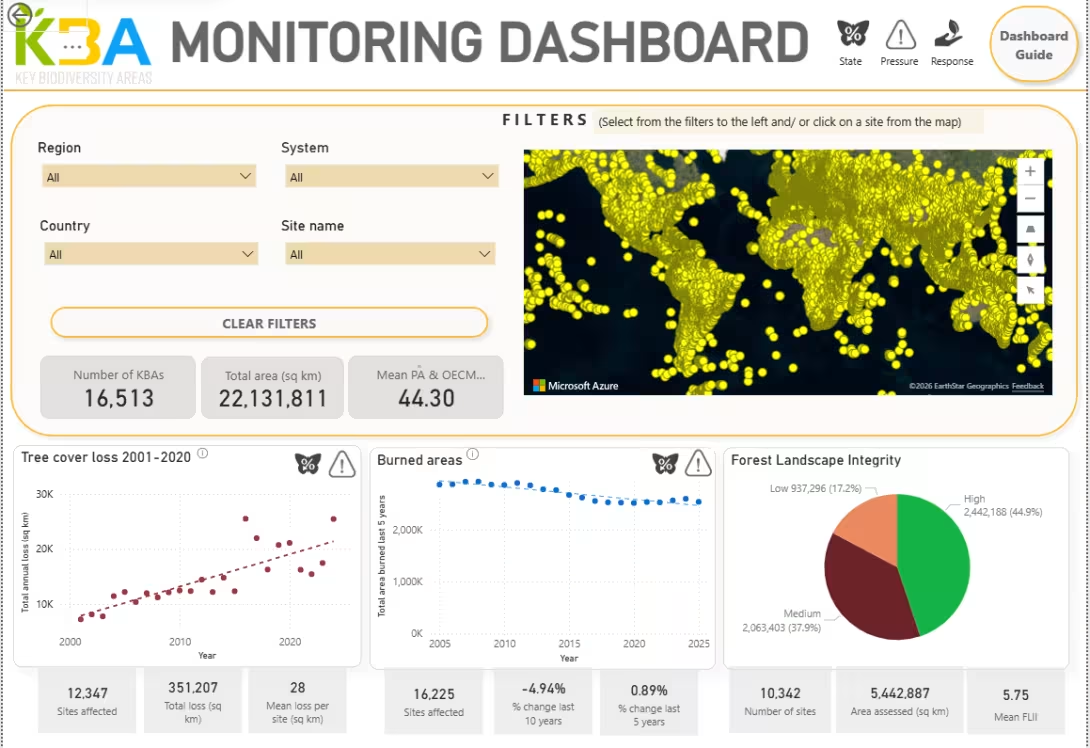
The results will be summarised and made publicly available on sites’ factsheets, the KBA Dashboard, and through IBAT, with the possibility of aggregating site-level results across countries, regions, or taxonomic groups. With this, users will be able to see not only how individual sites are faring, but also broader patterns such as the proportion of KBAs in favourable condition or the most common high-impact threats across multiple sites.
A shared conservation tool
The new KBA monitoring platform is not just about recording data, but about providing early warning when a site and its biodiversity are under pressure, showing where conservation measures are in place and working, and generating information that can influence policy, donor priorities, and management decisions. It turns site-level knowledge into something that can support action at national, regional, and global scales.
This is a platform for all. Site managers, KBA Partners, National Coordination Groups, and other knowledgeable contributors will all be able to participate, helping ensure that the system reflects real conditions on the ground. By combining local expertise with global datasets, the platform aims to make KBA monitoring both practical and scientifically reliable.