


Safeguarding the Irreplaceable: AZE Trees Helping Pinpoint Some of the Most Critical Key Biodiversity Areas
Trees are essential for life on Earth. They act as our planet’s lungs, provide vital refuge for countless species, are key for livelihoods for people worldwide, and are pivotal as we fight rising temperatures, soil erosion and habitat loss—some of the more visible effects of climate change. To ensure they thrive, the Alliance for Zero Extinction (AZE), a vital initiative of biodiversity conservation organisations working to prevent extinctions, is dedicated to safeguarding the Earth's most irreplaceable trees.
According to the Global Tree Assessment, an initiative led by the Botanic Garden Conservation International (BGCI) and the IUCN Species Survival Commission Global Tree Specialist Group, which has now comprehensively assessed the world's tree species, 3,841 tree species are identified as potential AZE qualifiers. The tree species AZE aims to conserve are unique because they are restricted to a single site globally, containing more than 95% of their known population. Because these Endangered (EN) or Critically Endangered (CR) trees exist nowhere else, the sites they inhabit are considered globally irreplaceable. As such, AZE sites automatically qualify as Key Biodiversity Areas (KBAs) because of their EN or CR tree species.
A global map of irreplaceability
From the peaks of the Mediterranean to the rainforests of the Pacific, AZE tree species span the world and are present at the most important sites for biodiversity.
-
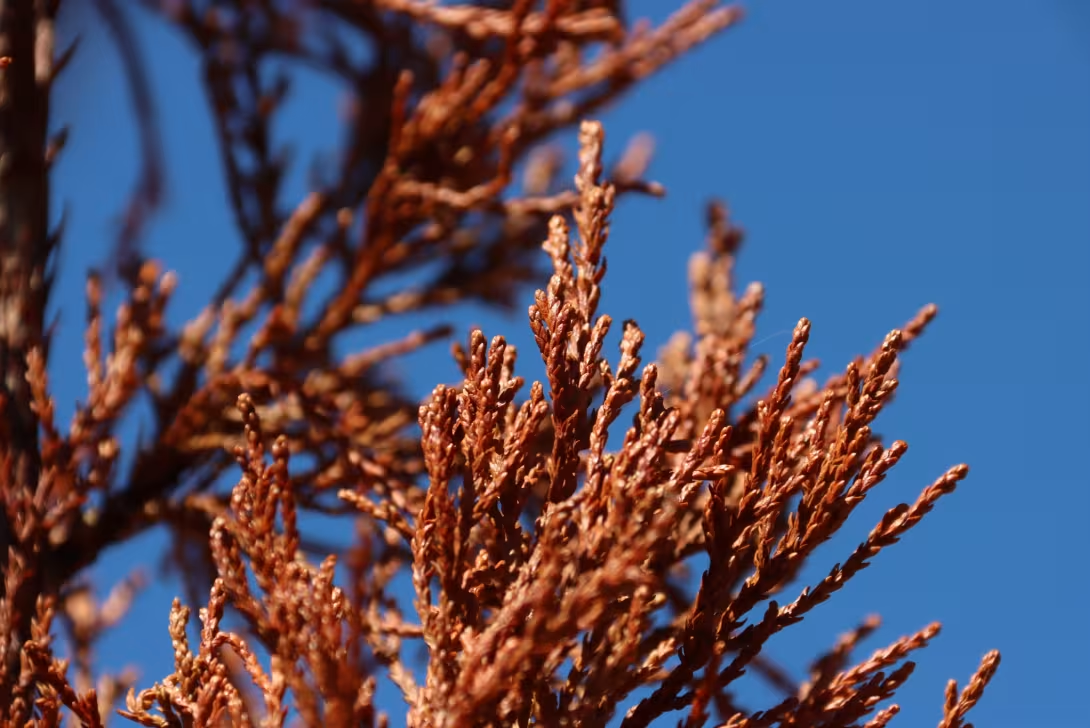
Africa: The Algerian Fir (Abies numidica) is one of the qualifying species for the Djebel Babor et Tababort KBA in Algeria. In Malawi, the Mulanje Cedar (Widdringtonia whytei) qualified the Mount Mulanje Forest Reserve as a KBA. In Uganda, several cycad species like the Muhure (Encephalartos whitelockii) have qualified sites like the Queen Elizabeth National Park and Lake George KBA, and Mpanga Falls KBA. Several sites in South Africa have also qualified as KBAs for the presence of AZE species like the Pondo Coconut (Jubaeopsis caffra) or the Piketberg Fountain-tree (Psoralea peratica).
-
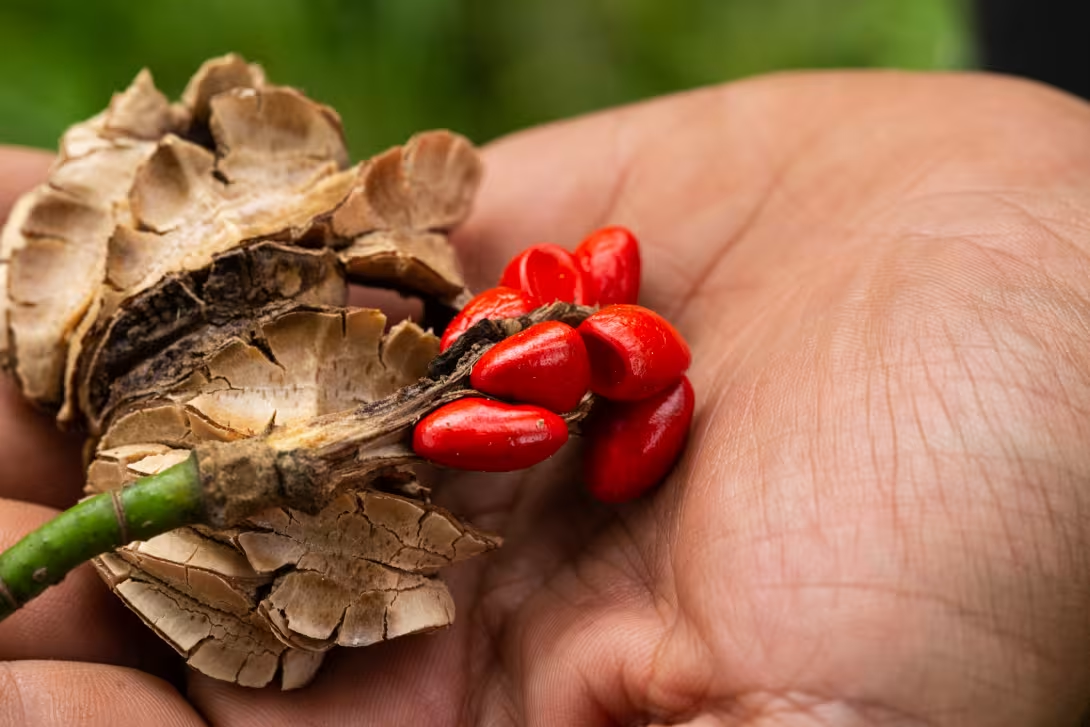
South America: Colombia is a global leader in tree diversity, particularly for the genus Magnolia, with 40 species—80% of which are endemic to the country. There, the Yariguies Mountain Range qualified as a KBA for the presence of the newly described Molinillo (Magnolia resupinatifolia) and Magnolia betuliensis. and the species Palosanto (Spirotheca mahechae). Other magnolia species, Almenegra de Ventanas (Magnolia polyhypsophylla), qualified Alto de Ventanas as a KBA.
-
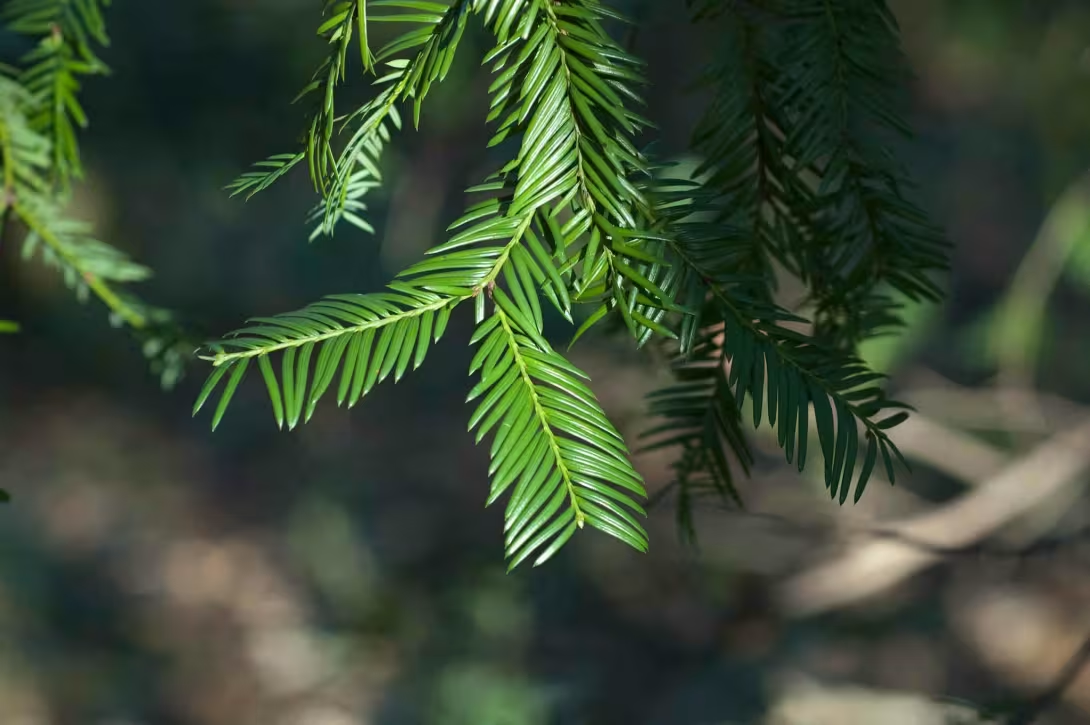
Central & North America: Mexico also boasts a rich diversity of trees with species like Aiouea elegans and Ageratina chimalapana found at the Chimalapas KBA, and the Majagua (Hampea montebellensis) that qualified the Lagos de Montebello as a KBA. In the USA, the Florida Yew (Taxus floridana) is the qualifying species for the Apalachicola River and Forests KBA.
-
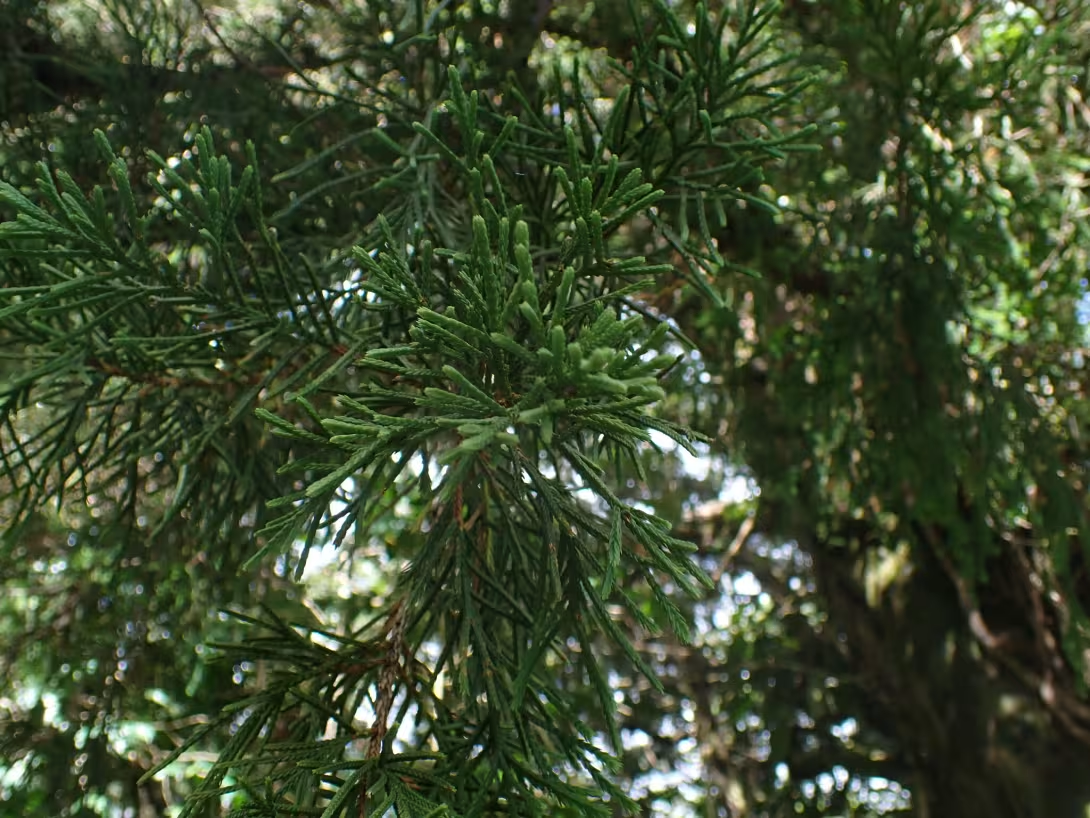
Caribbean: In Bermuda, the Southern Red Cedar (Juniperus bermudiana) qualified the Paget Marsh Nature Reserve as a KBA. Other countries in the Caribbean Region have also qualified AZE tree species like the Sabina (Juniperus Saxicola) found at the Turquino – Bayamesa KBA in Cuba, and the Ardisia byrsonimae present at the Peckham Woods KBA in Jamaica.
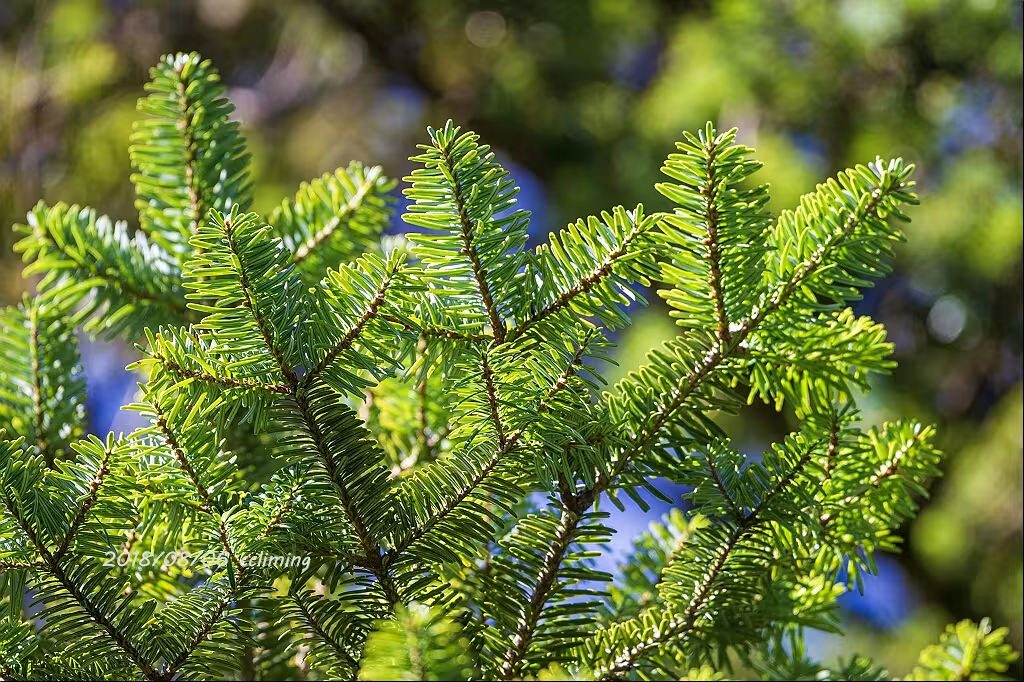
- Asia & Australasia: China’s Baishan Fir (Abies beshanzuensis) has qualified the Fengyang Shan - Baishanzu Nature Reserve as a KBA. Australia's prehistoric Wollemi Pine (Wollemia nobilis) qualifies KBA status for the Greater Blue Mountains. In Papua New Guinea, Rossel Island is a high-priority site qualified by species such as Rosselia bracteata and Calophyllum acutiputamen.
-
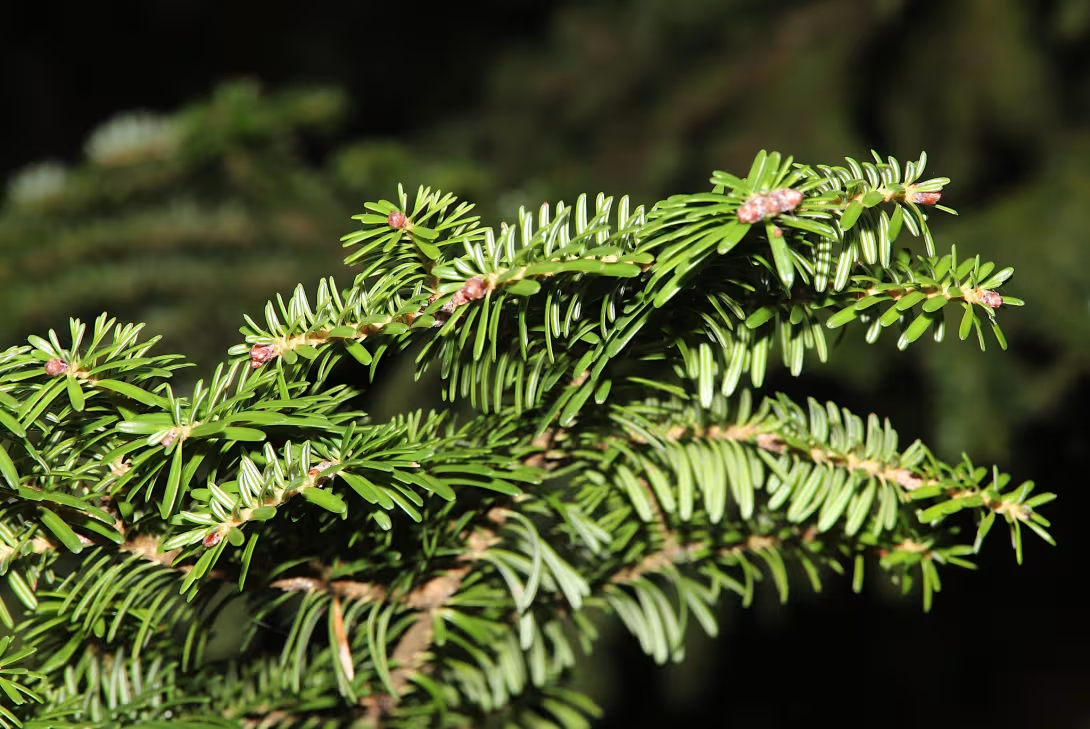
Europe: The Sicilian Fir (Abies nebrodensis) is the sole qualifying species for the Madonie KBA in Italy. There are other potential AZE species such as Marcetella moquiniana, Sorbus arranensis and Rhamnus lojaconoi, that could be incorporated into the KBA network.
Conservation impact
Beyond their biological uniqueness, AZE tree species are fundamental to global conservation policy. Their data is used by governments, NGOs, and the financial sector through tools like the Integrated Biodiversity Assessment Tool (IBAT) to minimise biodiversity loss and prioritise funding where it will have the biggest impact.
Local conservation efforts also show their cultural and ecological value. In Colombia, the organisation SalvaMontes focuses on protecting Magnolia polyhypsophylla, a species with only 70 known adult individuals remaining. To reverse the tide, SalvaMontes has an ongoing propagation and population reinforcement project.
Another culturally significant species in Colombia is the recently described Magnolia resupinatifolia, locally known as “molinillo” because its fruit receptacles are traditionally used to make kitchen utensils known as “molinillos”, used for whisking chocolate and other warm beverages.
Protecting these trees requires community engagement, the support of conservationists, researchers and authorities alike. This year’s World Tree Day, the AZE initiative reminds us of the importance of trees and the responsibility we have to protect the irreplaceable sites they depend on. The message from is clear: protecting these specific locations is not just a choice, but a global necessity to prevent the permanent erasure of Earth's botanical heritage.