


Adapting TESSA for KBA site management Co-designing climate-resilient Nature-based Solutions in Ecuador
Authors: Stefano Barchiesi¹, Gabriela Toscano¹, and Miriam Factos²
1. BirdLife International
2. Fundación Jocotoco
Key Biodiversity Areas (KBAs) across Ecuador support globally important biodiversity and provide essential ecosystem services to local communities. These landscapes are increasingly affected by climate change, land-use conversion, mining pressures and wildfire risk. Decision-makers and communities need approaches that can simultaneously safeguard biodiversity, maintain ecosystem service delivery and support climate adaptation. Nature-based solutions (NbS) are an important option for meeting this need.
The project Ecosystem Services of KBAs under Climate Change, funded by the Global Centre on Biodiversity for Climate (GCBC), adapted the Toolkit for Ecosystem Service Site-based Assessment (TESSA) to support participatory design and validation of NbS across KBA landscapes as follows:
- identifying ecosystem services most critical to communities,
- linking local knowledge with climate and biodiversity modelling,
- supporting collaborative scenario development, and
- identifying evidence-based NbS options aligned with national conservation priorities.
The experience provides practical lessons for practitioners working at the interface of biodiversity conservation, climate adaptation, and community engagement and sustainable livelihoods.
Preliminary results and methodological insights were shared during the recent KBA National Coordination Group meeting, which brought together partners working across Ecuador’s Key Biodiversity Areas to reflect on how ecosystem services can help guide more effective responses to climate change. Rather than presenting a single set of findings, the discussion showcased an evolving approach i.e., one that combines scientific modelling with the knowledge and priorities of those managing and depending on these landscapes.
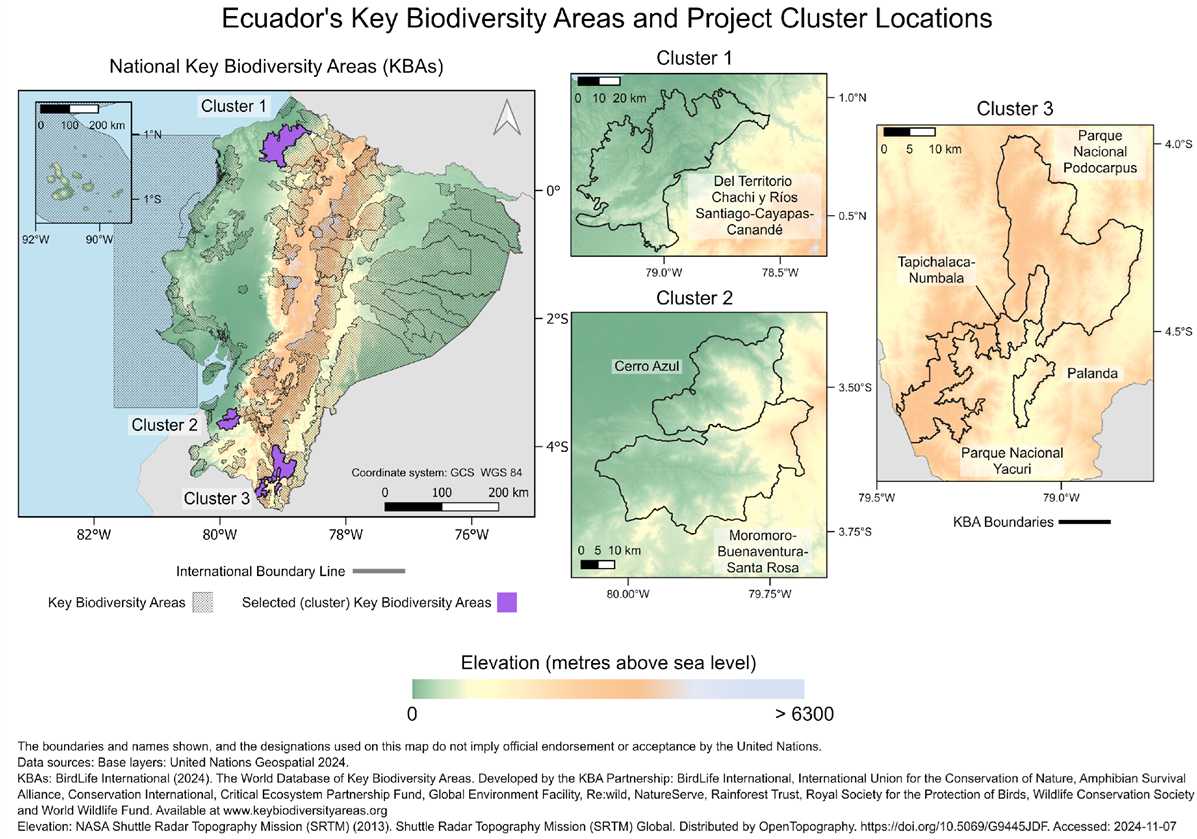
The project is analysing ecosystem services in KBAs using TESSA in three clusters (Fig. 1): Northwest (Choco), Southwest (El Oro) and Southeast (Podocarpus-El Condor.). These clusters contain a diversity of land tenure and management types (i.e., private, municipal, provincial, Indigenous, and national reserves).
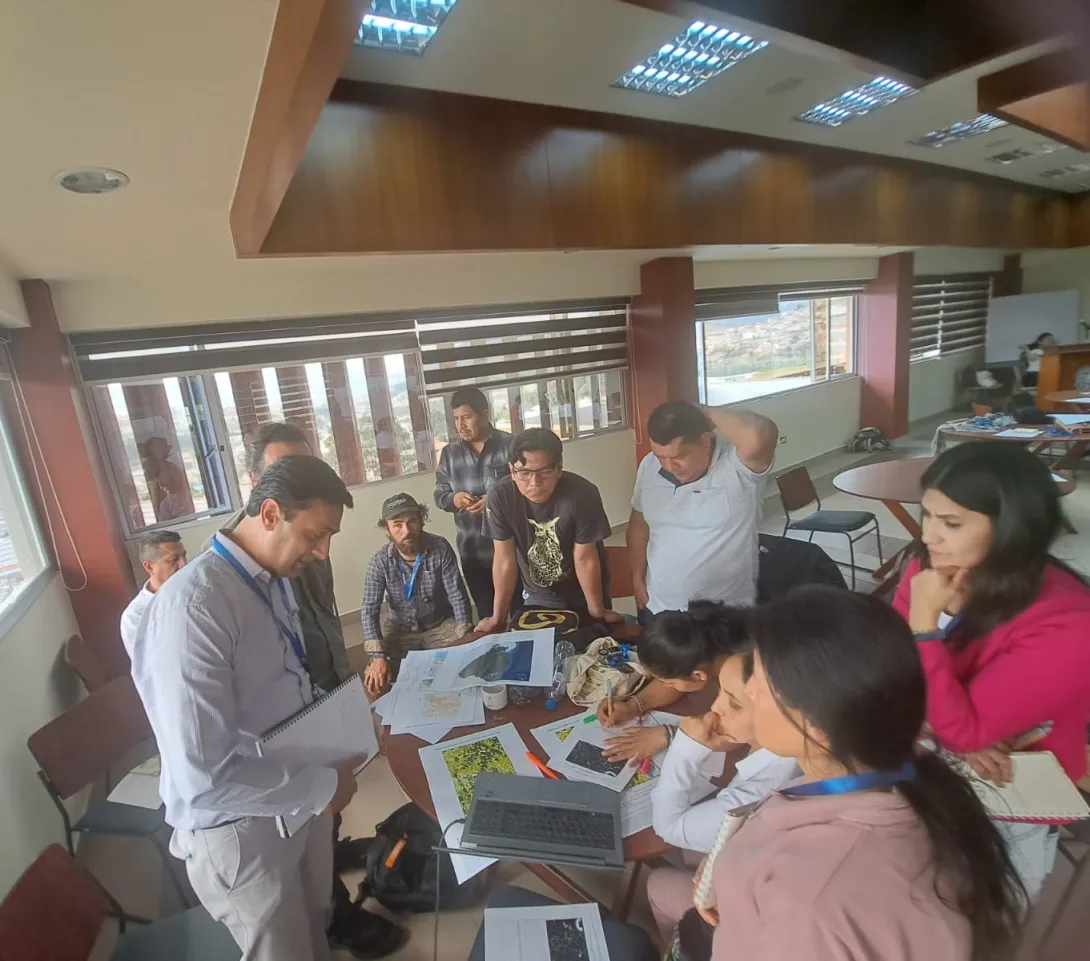
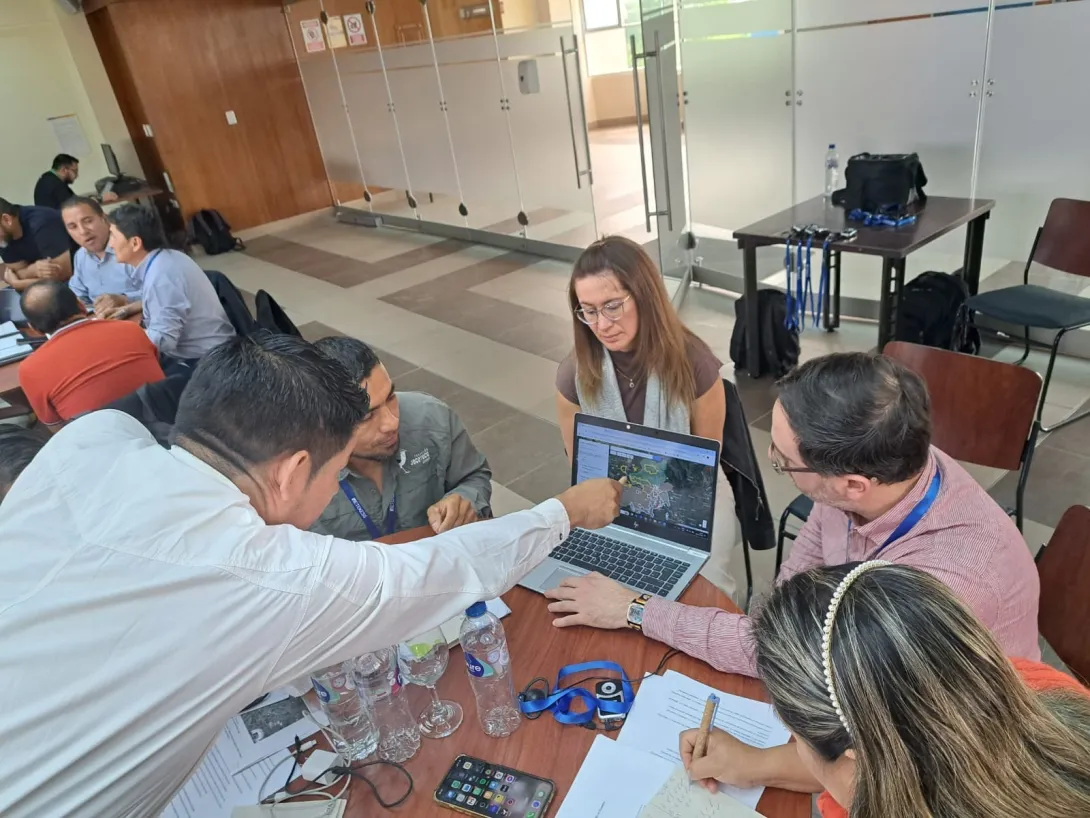
From the cloud forests of Podocarpus–El Cóndor to the productive mosaics of El Oro and the biodiverse systems of the Chocó, a common thread emerged: while climate risks are increasing, so too are opportunities to design solutions that work for both people and nature. Through participatory workshops in Loja and Mindo, stakeholders identified the ecosystem services they rely on most, from water and carbon to tourism and livelihoods, and explored how these could be sustained under future scenarios.
Across the three clusters, freshwater regulation, wild-harvested products, carbon sequestration and (in some KBAs) nature-based tourism emerged as critical ecosystem services, reflecting the strong dependence of local communities on both ecological integrity and diversified livelihoods. In both cluster 1 and 3, water regulation emerged as a critical ecosystem service, underpinned by forest integrity in the Chocó and by high-altitude ecosystems such as páramos and cloud forests in Podocarpus–El Cóndor.
In El Oro, stakeholders also highlighted the importance of agricultural landscapes supporting cacao and diversified agroforestry systems that provide both income and biodiversity benefits.
Participants identified several pressures across the clusters, including agricultural expansion, mining pressures and, in the southern ones, wildfire risk. In El Oro, particular emphasis was placed on managing agricultural–forest mosaics and balancing production systems with conservation objectives.
Across the three KBA clusters, stakeholders also prioritised NbS interventions grouped into three overarching categories, supported by enabling mechanisms such as compensation for ecosystem services (CES), which can help sustain conservation and restoration efforts over the long term.
Watershed and forest restoration: particularly relevant in Podocarpus–El Cóndor for safeguarding high-altitude water regulation and in Chocó for maintaining watershed stability in high rainfall systems. In El Oro, restoration efforts often focus on strengthening connectivity between remnant forests and agroforestry landscapes.
Sustainable livelihood diversification: Livelihood diversification emerged as a particularly important NbS pathway in El Oro, where agricultural landscapes are closely interwoven with conservation areas and provide opportunities to balance biodiversity protection with income generation.
Strengthening local governance and planning: Governance strengthening was identified as a cross-cutting priority across all clusters, particularly where land tenure arrangements are complex and require coordination among multiple stakeholders.
What makes this approach particularly valuable is how it connects different types of knowledge. Modelling helps identify where interventions could deliver the greatest benefits, while stakeholder engagement ensures that proposed Nature-based Solutions are grounded in local realities. While the TESSA is a robust and practical tool for the initial assessment of ecosystem services, it is recommended that it be supplemented with other methodologies and analytical approaches, depending on the objectives and the level of detail required. The result is not a fixed list of actions, but a shared pathway for identifying solutions that are both impactful and feasible, and that can inform KBA management and national planning processes moving forward.