


Biodiversity guardians: Women working for the persistence of nature
Women have played a pivotal role in human history. They have been the cornerstones of societies throughout the world and play a crucial role in the development of various sectors, among them, the scientific. Countless women, from various fields, have made enormous contributions and discoveries. Like the Chinese scientist Tu Youyou, whose groundbreaking discovery of artemisinin helped treat malaria effectively. Or the American primatologist Diane Fossey, who dedicated her life to understanding the endangered mountain gorillas and ensuring they persisted.
However, though scientific women have some level of recognition, there’s still a gender gap to be filled to achieve real equality. On this, UNESCO reported that only 35% of students in STEM-related fields are women, and they remain underrepresented.1 Though there’s still a long road ahead to attain true inclusion and parity, today we want to shed light on the women who are already making enormous contributions to conservation by working on identifying, assessing, and conserving the most significant places on Earth for the persistence of biodiversity.
Dr. Ciara Raudsepp-Hearne, environmental scientist. Director of Conservation Strategy at Wildlife Conservation Society (WCS) Canada.
Dr Ciara Raudsepp-Hearne is an environmental scientist who has contributed greatly to biodiversity conservation in Canada. She was drawn to work with WCS Canada because of Dr Justina Ray, current President and Senior Scientist, who runs “an organisation that is full of positive and supportive energy, where integrity, knowledge and hard work are the norm across all programs.”
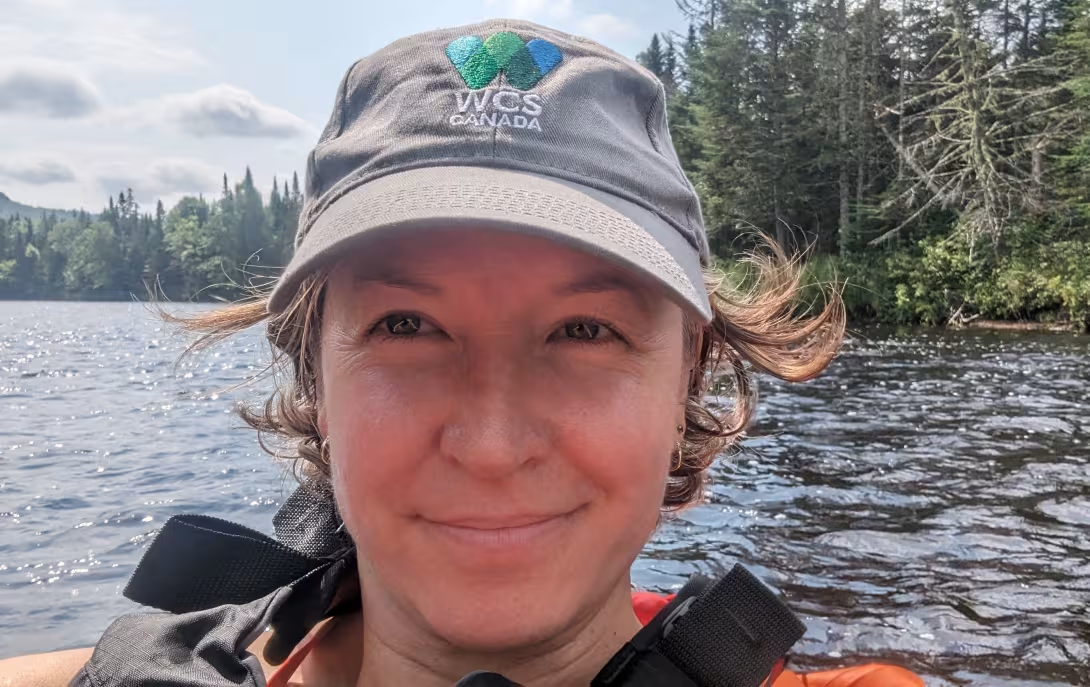
Though many women work and lead environmental science and conservation in Canada, Ciara states that the gender gap in STEM still exists, with less than 25% of STEM positions held by women, and an underrepresentation in fields like engineering, computer science and senior positions.
When she first joined the organisation in 2019, she undertook the challenge of developing the KBA programme for Canada: “the work involved convening a national coordination group, socialising the KBA tool across governments, NGOs, scientists and Indigenous communities, piloting participatory processes and methods to apply KBA criteria across all taxonomic groups and ecosystems, developing a national KBA standard, developing data infrastructure for storing and managing KBA information in Canada, communication and outreach, research on KBA topics with academic institutions and students, and finally developing and reviewing hundreds of KBA proposals”. As the KBA team grew, Ciara continued directing the initiative that not only supports the local KBA process, but also “KBA work at the global scale by sharing tools and approaches developed through 7 years of experience applying KBA criteria.”
The team Ciara has brought together is inclusive at its core and celebrates collaboration and diversity: “With many women involved, there is a level of comfort and openness that I think both men and women appreciate and contribute to. We do great science and take the work very seriously, but also like to laugh, talk about pets and families alongside chat about biodiversity, and share both personal and work challenges and celebrations. This makes the work more enjoyable and sustainable.” This spirit of openness extends nationwide, with hundreds of knowledgeable women across Canada generously contributing their time and expertise to build a collaborative conservation community.
Ciara believes that “women have already played a central role in KBA identification and stewardship in Canada, with many women leading site nomination, monitoring, and community engagement efforts. Rather than creating separate engagement mechanisms, our focus is on maintaining inclusive, community-based processes that value diverse forms of expertise and leadership. By supporting relational, collaborative approaches and amplifying peer learning and visibility, KBA work in Canada continues to create space for women’s leadership to thrive organically”.
Yuting LIU, ecological landscape architect. Programme Officer at the International Union for Conservation (IUCN) China.
Yuting Liu was a practising ecological landscape architect for three years before joining IUCN China. Currently, she is “responsible for research and capacity building initiatives related to Nature-based Solutions and biodiversity conservation.” Yuting shares that from the perspective of IUCN observations, the number of women who actively engaged in the scientific field is high: “a significant portion of IUCN’s member organisations in the country are led by women or have women playing key roles in research and advocacy. In roles traditionally dominated by men—such as rangers and forest protectors—more young and middle-aged women are now joining due to their passion for nature conservation.” However, though progress is evident and the gender gap is narrowing, there’s still some work to do to achieve complete equality.

In connection with KBAs, Yuting Liu serves as the focal point for the China KBA National Coordination Group (NCG). She contributes to the KBA work from various fronts; from coordinating to communicating and delivering capacity building. “I promote the KBA concept through workshops and social media, facilitate proposal submissions and expert reviews as a bridge between applicants and the NCG, and assist approved candidates in uploading data to the World Database of Key Biodiversity Areas.”
As China’s KBA NCG focal point, Yuting Liu has seen, first hand, how women enrich the KBA process in two pivotal ways. First, the KBA review process is intricate, often requiring proposers to work through multiple rounds of expert feedback. I've found that female proposers are particularly adept at this detailed engagement. Their patient, collaborative approach helps ensure that technical requirements are fully met, bridging the gap between scientific standards and on-the-ground realities to produce more thorough submissions.
Second, Women also bring a unique dimension to KBA work through storytelling. In our workshops, they often share powerful, firsthand accounts from their conservation fieldwork. These narratives go beyond raw data, helping to humanise the science and make the case for KBAs more relatable and compelling to a wider audience, thereby strengthening both research and advocacy efforts. To foster greater engagement of women in the KBA work in China, Yuting Liu recommends “a multi-faceted approach centred on inspiration, support, and recognition. A practical starting point is to amplify the visibility of female role models and mentors, as seeing peers lead successful KBA nominations is a powerful motivator. We can also enhance participation by designing flexible capacity-building activities that accommodate diverse responsibilities […] This combination of celebrating stories, providing practical support, and building an inclusive network would create a virtuous cycle, encouraging more women to contribute to the KBA process.”
Catherine Numa, conservation biologist. Biodiversity Standards and Indicators Manager at IUCN Centre for Mediterranean Cooperation, and KBA Regional Focal Point for Europe, North Africa and the Middle East.
Catherine Numa is a conservationist with over 15 years of experience leading Red List assessments, KBA identification, and strategic conservation planning. From her experience working in the Mediterranean, Catherine draws that women’s participation in science varies across the region. “In many countries, women are strongly represented in academic and research settings, particularly in environmental sciences. However, their presence still declines in senior roles and in field-based work. Cultural and logistical barriers still limit full participation, but progress is evident, and the momentum is moving in the right direction.”
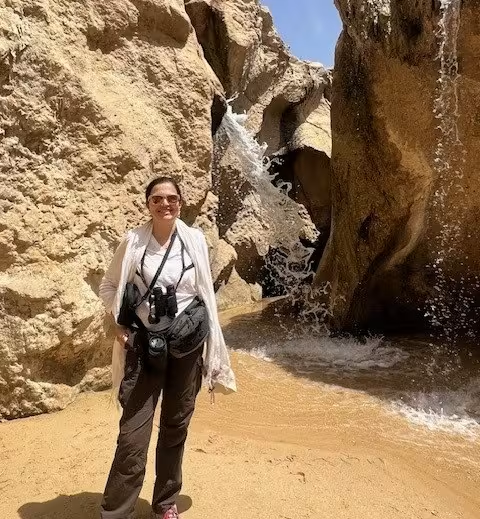
Catherine’s contribution to the KBA work is from both scientific and technical coordination perspectives. Her role involves promoting the “consistent application of the KBA Standard by national experts and KBA National Coordination Groups. This includes encouraging the generation of the data needed to apply the Standard, promoting additional Red List assessments, and supporting the documentation and sharing of biodiversity observations at the country level.”
Throughout the KBA process, women play a pivotal role. Catherine thinks that they “bring a more integrative and collaborative approach to the process, paying attention not only to data and criteria, but also to dialogue, context and long-term impacts. This helps bridge science with policy and people, which is essential for KBAs to move from identification to effective conservation.” To ensure the involvement of women in KBA work is consistent and sustained over time, Catherine states that supporting mentorship and leadership opportunities, and ensuring women are visible as technical experts, is key—“capacity-building and recognition matter, especially for early-career scientists and practitioners.”
For effective conservation, investment in people, data, and collaboration is crucial. Catherine believes that “supporting regional networks of experts, improving data sharing between countries, and creating inclusive spaces for participation—particularly for women and early-career scientists” is essential.
Karolina Fierro-Calderón, biologist. Researcher at the Alexander von Humboldt Institute in Colombia.
Karolina Fierro-Calderón is a biologist from Colombia. She holds a PhD in Fish and Wildlife Biology from the University of Montana in Missoula, USA. Currently, she works as a researcher at the Alexander von Humboldt Institute in Colombia and over the past few years, she has coordinated projects focused on Key Biodiversity Areas (KBAs) and their associated trigger species of flora and fauna.
As part of the conservation community in Colombia, Karolina believes there has been significant progress in reducing the gender gap, with more women choosing the STEM fields at the undergraduate level of education.
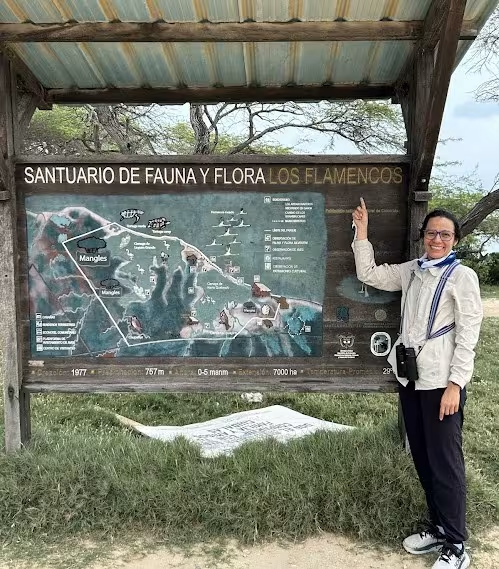
However, she’s also seen how, just as in the rest of the world, “this number begins to decline at the graduate level and further diminishes for permanent positions in both industry and academia.” Nonetheless, she feels hopeful and encouraged as “58% of researchers at my institute are women. I am fortunate to have several role models here who exemplify tenacity and motivate me daily. The Alexander von Humboldt Institute is one of five research institutes within Colombia's National Environmental System (SINA in Spanish). We hope that our progress can serve as a model for achieving similar gender equality across other research institutions in the country.”
Karolina has contributed to the expansion of Colombia´s KBA network by “supporting new KBA proposals, reviewing species data and site information, organising regular NCG meetings, and promoting the KBA program in relevant events. From the field of conservation science, we aim to help ensure the long-term protection of endangered and endemic species and their habitats across the country.” She supports this process as part of the Alexander von Humboldt Institute, current chair of Colombia´s KBA National Coordination Group (NCG).
From her experience leading the KBA process, Karolina believes women play a key role as they “bring a strong sense of emotional intelligence and relational skills to conservation work, which enables them to connect more effectively with the needs, values, and motivations of local communities. When communities feel genuinely heard and understood, conservation actions within KBAs are more likely to succeed, because these communities are, in essence, the frontline stewards of their territories. Ultimately, our role—as both women and scientists—is to share our technical knowledge while humbly learning from local experiences, so that together we can design more effective, inclusive, and sustainable conservation strategies.”
To ensure women's involvement in the KBA process, Karolina believes it is important to lead by example, “showcasing women in leadership and technical roles within KBAs.” Furthermore, she states that it is important to “design projects with gender equity in mind at the local level. Practical steps include striving for balanced participation of women and men in field expeditions, species monitoring, workshops, and decision-making meetings. These intentional, everyday actions can significantly encourage and normalise women’s meaningful participation in KBA identification, management, and conservation.”
Blessings Chingagwe, environmental conservationist. Programmes Manager at the Wildlife and Environmental Society of Malawi (WESM).
Blessings Chingagwe is an environmental conservationist who has contributed to promoting Malawi’s biodiversity, focusing her work on biodiversity research, informatics and conservation. She currently works at the Wildlife and Environmental Society of Malawi (WESM) and is contributing to KBAs from the fields of biodiversity and research.
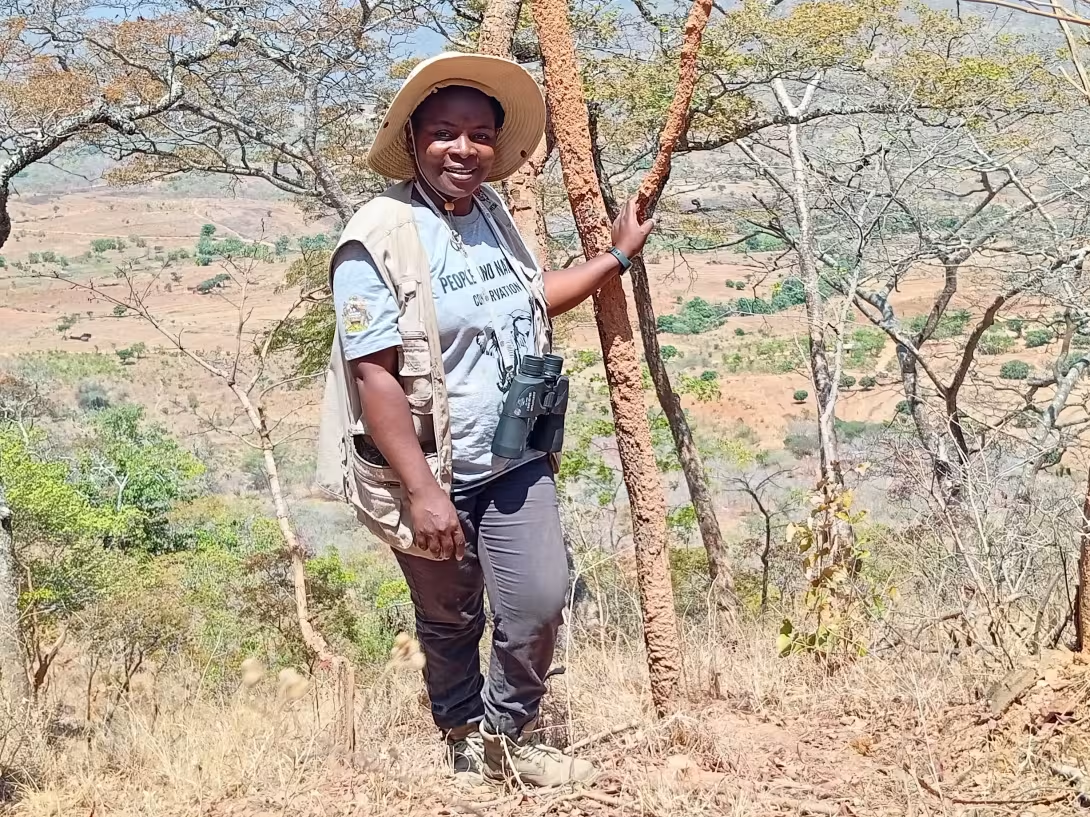
“I have been instrumental in doing assessments and proposals for KBAs. I have been doing species assessments, including Red List assessments, and collecting a lot of species data, which feeds into KBA assessments and updating KBAs status. I am currently the KBA National Coordination Group (NCG) focal point for Malawi.”
From her years working in conservation, Blessings has seen the narrowing of the gender gap in the sector. “A few years ago, the scientific field was dominated by the masculine community and posed intimidation to the women's community. But recently, there has been acceptance by almost everyone that women can be valuable assets in the scientific field. The gap is still big, but there is good progress.”
Women play a key role. They possess first-hand information about the decline of species, particularly of those that provide primary resources and services at home like firewood, water and medicine. Blessings believes that “women share a special bond with nature due to their frequent interaction with it. They understand its uniqueness in their frequent interaction with nature. They share a bond with nature that nature does not share with men. I think women understand nature more than men.”
To ensure women continue to engage in conservation, and support the KBA work in Malawi, Blessings states it is important to appeal to the intimacy women share with nature and “empower them to become a community of citizen scientists to provide evidence of presence, absence, abundance and trends of key species.” This involves all women, not only those with access to higher education, but also those who possess traditional knowledge: "Indigenous women have a special understanding of species trends, and they should not be left behind during species assessments. Women hold powerful indigenous knowledge about species.”
1. UNESCO. (February 8, 2026). Women and girls in science: exploring the challenges facing female scientists today. https://www.unesco.org/en/articles/women-and-girls-science-exploring-challenges-facing-female-scientists-today