


Cameroon Strengthens National Ownership of the KBA Process

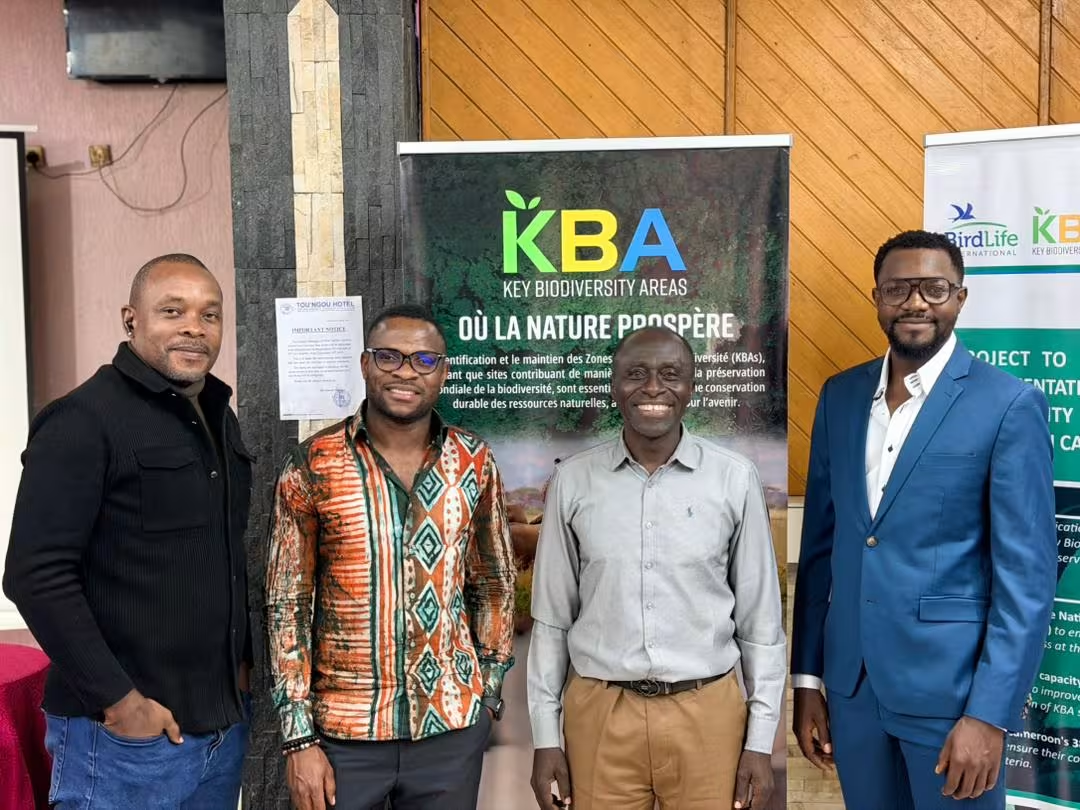
The National training workshop on the Global Standard for the Identification of Key Biodiversity Areas (KBA) took place from 24 to 27 February 2026 in Yaoundé, Cameroon. The workshop was coordinated by FODER with support from the KBA Secretariat and Birdlife International. The event brought together about thirty-five participants from government agencies, NGOs, research institutions, universities, Indigenous peoples and local communities and the private sector.
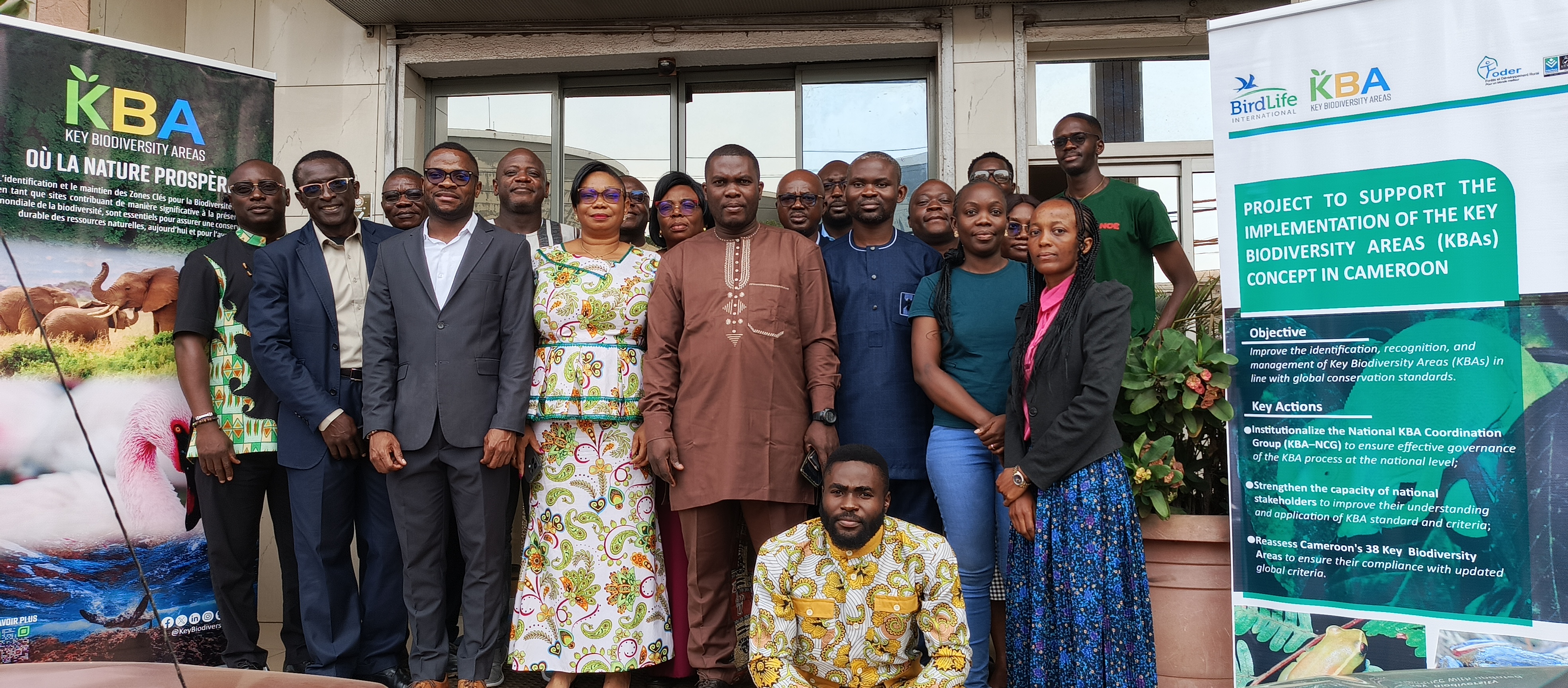
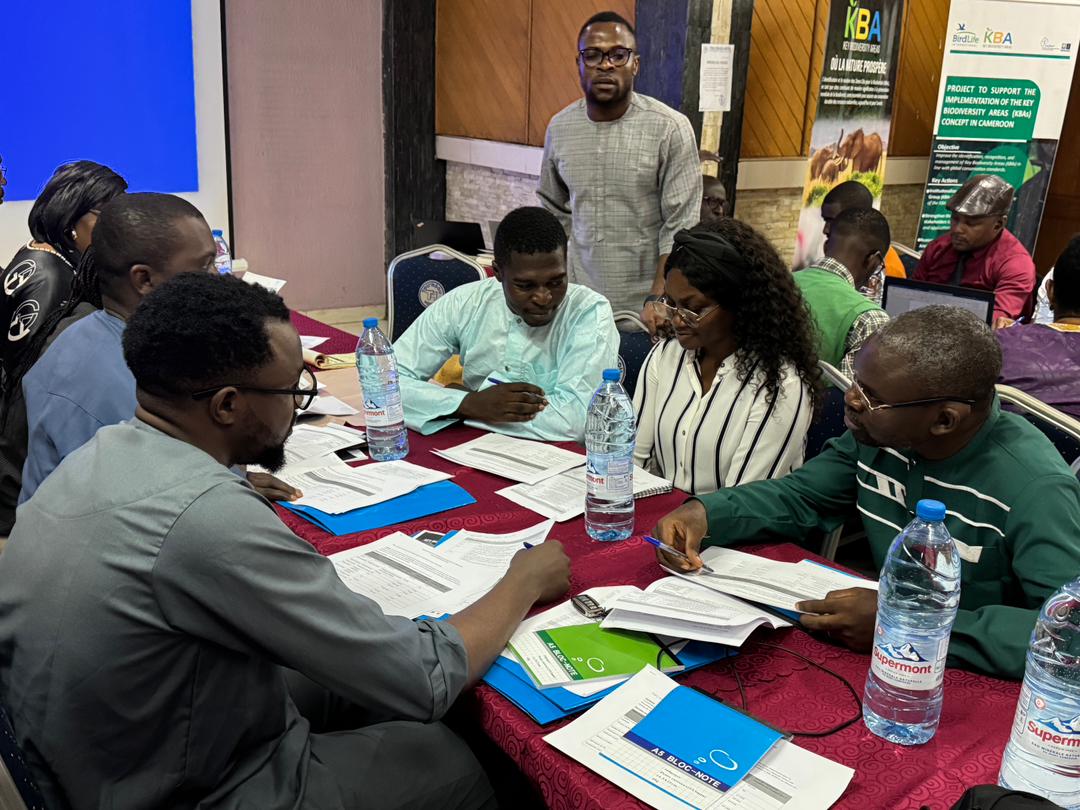
Its overall purpose was to strengthen national capacities for a coherent and harmonized adoption of the global KBA standard, which is essential for conserving Cameroon’s rich yet increasingly threatened biodiversity. Throughout the four-day workshop, participants deepened their understanding of the KBA concept, its scientific criteria and thresholds, and the full procedure for identifying, delineating, documenting, and reassessing KBA sites. The training combined theoretical presentations, group exercises, case studies, and interactive discussions. Key modules covered species and ecosystem‑based criteria, ecological integrity, stakeholder participation, documentation requirements, mapping procedures, and use of the World Database of Key Biodiversity Areas (WDKBA).
The workshop also laid the groundwork for strengthening national ownership of the KBA process. Participants were prepared to contribute to the reassessment of the thirty-eight existing KBAs in Cameroon and the potential identification of new sites. In addition, the creation of a National Coordination Group (NCG) commenced to oversee data compilation, expert consultations, capacity‑building, and submission of KBA proposals through WDKBA.
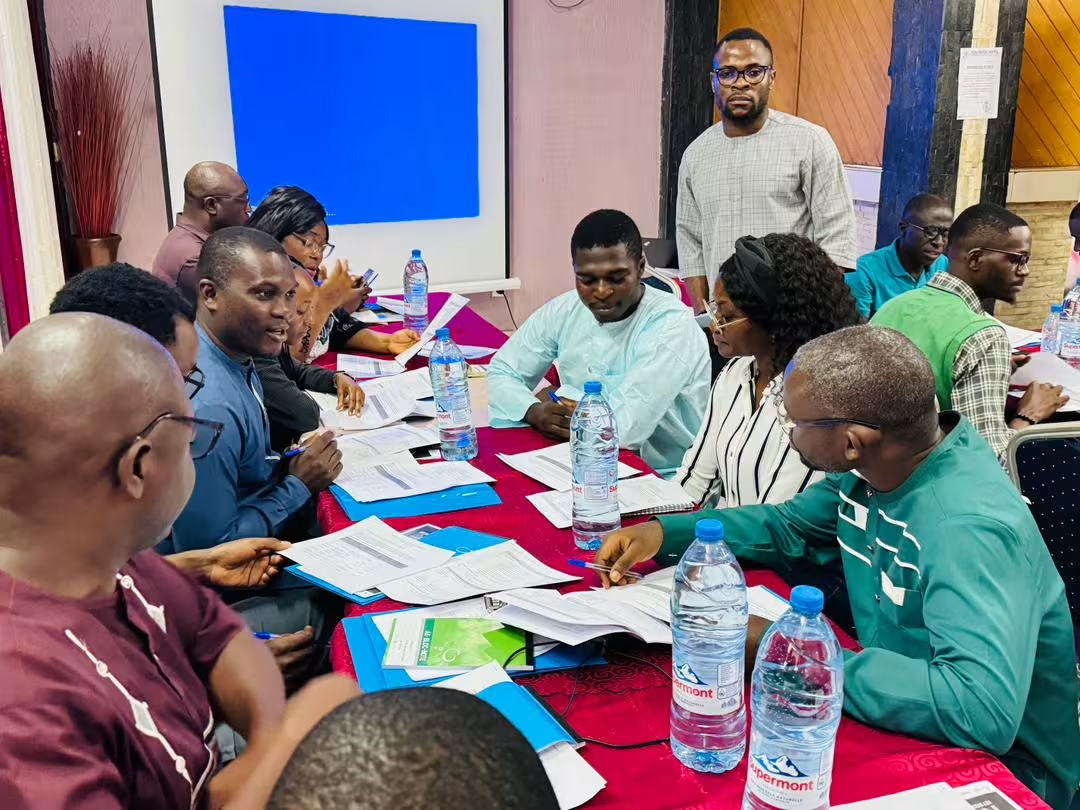
Importantly, discussions also emphasized the need for formal government approval and institutional support to ensure that the KBA process is nationally endorsed, fully integrated into environmental planning frameworks, and sustainably implemented across Cameroon.
The sessions concluded with discussions on funding opportunities, including the Critical Ecosystem Partnership Fund (CEPF), and collaboration between Birdlife International and FODER.
Next Steps
Based on the outcomes of the workshop, the following actions were identified as priority next steps for advancing the KBA process in Cameroon:
- Government approval or go ahead: Ministry of Environment, Protection of Nature and Sustainable Development (MINEPDED); Ministry of Forestry and Wildlife (MINFOF) and Ministry of Scientific Research and Innovation (MINRESI)
- Finalize the membership of the NCG.
- Define timelines, responsible institutions, required data, and key milestones.
- Define roles and responsibilities, including data validation, coordination of experts, and oversight of KBA proposals.
- Create and Activate WDKBA KBA NCG Accounts
- Ensure that all NCG members and relevant national experts have active accounts on the World Database of Key Biodiversity Areas (WDKBA).
- Provide follow‑up training on data entry and proposal submission on (WDKBA)
- Reassess the 38 Existing KBAs
- Compile updated species and ecosystem data.
- Run national expert reviews using the global KBA criteria
- Update or confirm each site’s status in line with the global standard.
- Strengthen Stakeholder Engagement
- Continue awareness‑raising among government agencies, local communities, research institutions, and conservation partners.
- Ensure inclusive participation in KBA identification and validation processes.
- Mobilize Resources for Implementation
- Explore potential funding opportunities; particularly the Critical Ecosystem Partnership Fund (CEPF) and other conservation donors.
- Prepare concept notes and proposals to support national KBA activities.
- Maintain Collaboration with International Partners
- Continue technical engagement with the KBA Secretariat, Birdlife International, and regional focal points.
-
Seek ongoing support for capacity-building and quality assurance.
KBAs in Africa
For more information about KBAs in Africa, reach out to Serge Angali, Regional Focal Point for Africa.
Africa
Contact: sangali@keybiodiversityareas.org
Serge Angali is the Regional Focal Point for Africa. He is a Wildlife ecologist, enthusiastic about the management of biodiversity data, GIS, and passionate about applying data science to advance conservation efforts, with a background in Protected Area Management.