


The World’s Most Important Sites for Nature: The First Global Review of Key Biodiversity Areas
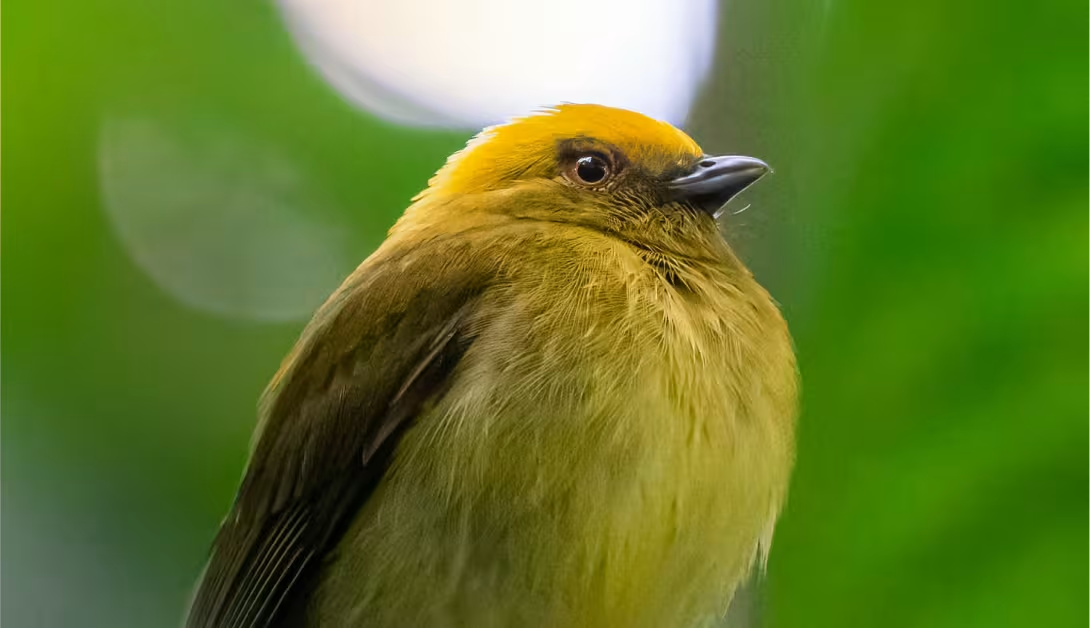
New study reveals that with 16,596 sites identified worldwide — spanning 22.1 million km² and supporting more than 18,000 species — the KBA network now represents the most comprehensive global map of sites critical for biodiversity.
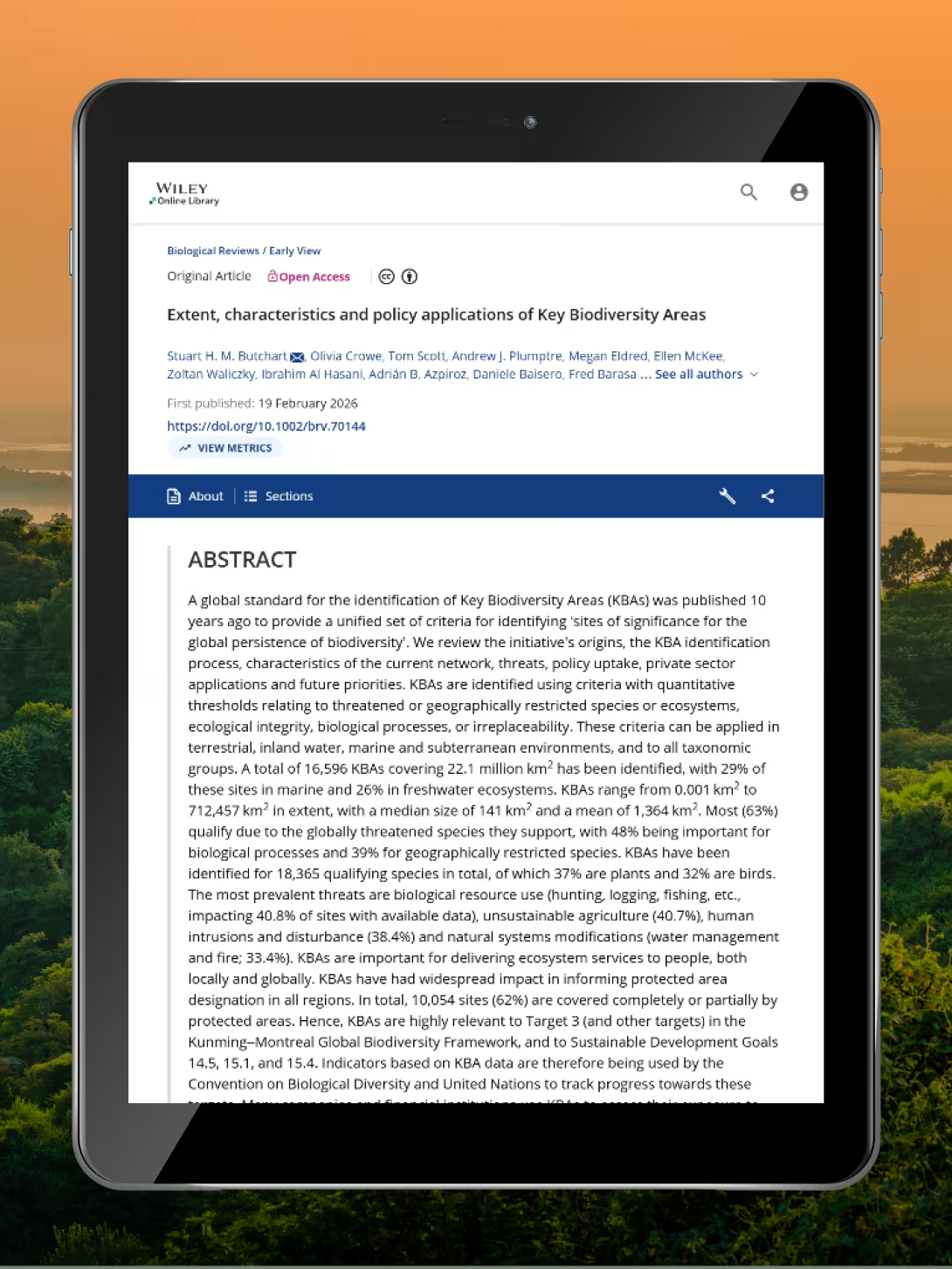
After several decades of different organisations using different approaches for identifying important sites for nature, the International Union for Conservation of Nature (IUCN) unified these by publishing the Global Standard for the Identification of Key Biodiversity Areas in 2016. This landmark document provides a unified set of criteria for identifying ‘sites of significance for the global persistence of biodiversity’. Now, almost ten years on, a newly published paper by over 50 authors from 19 countries provides the first global audit of the KBA approach. It synthesises the lessons learned and outcomes of applying the global standard, documenting the scale, and characteristics of KBAs, their use by governments, intergovernmental bodies and the private sector, as well as future priorities for the KBA approach.
The origins of KBAs can be traced back to the 1970s, when the concept of Important Bird Areas was defined and the approach was used to map key places for birds. Over time, similar initiatives emerged for plants, freshwater systems, butterflies, and other species groups. However, to respond to the increasing need for a globally unified standard, KBAs were born. With them, the KBA Partnership [1] was formed with the goal of ensuring the correct application of the standard, the identification of a comprehensive KBA network and the protection and safeguarding of these sites.
By 2024, as many countries comprehensively assessed their sites of biodiversity importance, the KBA network expanded to encompass a staggering 16,596 sites, covering 22.1 million square kilometres. Lead author of the paper, Dr Stuart Butchart, Chief Scientist at BirdLife International, points out that ‘These KBAs range from tropical rainforests to coral reefs, spanning terrestrial, freshwater, marine and even subterranean systems. Based on the KBA criteria, most sites (63%) qualify because they support globally threatened species, and nearly half (48%) are important for biological processes such as large congregations or migration’.
KBAs have been identified as significant for 18,365 species — from plants and birds to mammals, amphibians, reptiles, fishes, invertebrates and fungi. These locations are also crucial for human persistence. The array of ecosystems within them provides important contributions to people: climate mitigation, freshwater provision and purification, flood mitigation, coastal protection, tourism, and cultural identity.
Dr Andrew Plumptre, Head of the Key Biodiversity Secretariat and a coauthor of the paper said “The identification of these sites is critical, but only the first step. To ensure KBAs are conserved, the current pressures affecting them need to be addressed”. One of the major threats affecting these sites is the unsustainable use of biological resources, such as logging, fisheries and hunting (impacting 40.8% of these sites), followed by agricultural expansion and intensification (40.7%), human disturbance (38.4%), and modification of natural systems through fire and water management (33.4%). Driven by such threats, deforestation remains a major concern — terrestrial KBAs have lost on average 8.2% of their tree cover between 2001 and 2020, with accelerating rates in many regions.
Effective conservation and management of KBAs is also essential. Coverage has increased steadily since 2000. The paper shows that, 62% of KBAs overlap completely or partially with protected areas or ‘other effective area-based conservation measures’ (OECMs) such as some indigenous territories, and 20% are fully covered, with the highest proportion of the latter in Europe and Africa. However, many KBAs still lack adequate management. Fewer than half of monitored KBAs have management plans, and only about one-third have comprehensive or substantive conservation measures being implemented.
Dr Thomas Brooks, Chief Scientist at IUCN and another coauthor, said “To improve conservation and management of important sites for biodiversity, KBAs are increasingly being used by decision makers and have become widely recognised and used in policy and practice”. Governments are using them to inform expansion of protected area networks, spatial planning for development and prioritising actions. Multilateral environmental agreements like the Kunming Montreal Global Biodiversity Framework (KMGBF) [2] and the Sustainable Development Goals (SDGs) are using information on KBAs to track progress towards goals and targets on conserving nature. Businesses are using KBAs to assess and disclose nature-related risks, financial institutions are using them to inform their lending strategies, and donors are using KBAs to prioritise investments.
Despite the progress achieved in the last decade, the study pinpoints the priorities and challenges for the next one. Among the priorities are the aim of completing and updating assessments in under-studied countries, expanding the application of KBA criteria relating to ecosystems, ecological integrity and irreplaceability, strengthening monitoring of KBAs and securing protection and long-term, effective conservation of these sites. The latter includes supporting Indigenous Peoples and local communities who steward many KBAs, ensuring their effective protection, restoration and sustainable use of natural resources.
Butchart concludes “while our new paper details how the KBA initiative has succeeded in pinpointing the sites that matter most for biodiversity conservation, the challenge now lies in ensuring that these important places are safeguarded for generations to come”.
Read the full paper here.
ENDS
[1] The KBA Partnership comprises 13 conservation organisations: BirdLife International, International Union for Conservation of Nature, American Bird Conservancy, Amphibian Survival Alliance, Conservation International, Critical Ecosystem Partnership Fund, Global Environment Facility, NatureServe, Rainforest Trust, Re:wild, Royal Society for the Protection of Birds, Wildlife Conservation Society, WWF. Their collaboration aims to strengthen global conservation efforts by systematically mapping and safeguarding the planet’s most important sites for biodiversity.
[2] Specifically,Target 3 of the KMGBF: Ensure and enable that by 2030 at least 30 per cent of terrestrial and inland water areas, and of marine and coastal areas, especially areas of particular importance for biodiversity and ecosystem functions and services, are effectively conserved and managed.