Madagascar: 6 Marine and Coastal KBA Sites Confirmed Under the IUCN 2016 Standard, Covering More Than 3 Million Hectares
Author: GEF6-MPAs Madagascar
Six Sites, More Than 3 Million Hectares Recognised
The results are already significant: through the GEF6-MPA project, six marines and coastal KBA sites have been officially confirmed in Madagascar by the KBA Secretariat, covering 3,155,685 hectares — Tendro Atsimon'ny Nosy, Tandavandriva Nosy Be – Tsimipaika Bay, the Mahavavy-Kinkony Complex, Antongil Bay, Nosy Boraha Île Sainte-Marie, and Bombetoka Belemboka. The momentum continues, with five new sites representing more than 1,700,000 hectares still under evaluation.
Distributed along the Malagasy coastline, these sites encompass a mosaic of essential marine and coastal ecosystems — coral reefs, mangroves, breeding grounds for marine mammals including cetaceans, and refuge areas for sea turtles — whose importance to global biodiversity is well established.
From KBA Label to Marine Protected Areas: a Chain of Concrete Results
The KBA label provided the scientific foundation upon which the GEF6-MPA project was able to identify and prioritise sites for support in the creation of Marine Protected Areas. To date, three MPAs have already been granted temporary creation status: the AMTP Sorkay (Nosy Boraha – Sainte-Marie), the AMP Tandavandriva Nosy-Be, and the AMP Atimo Vata'e. The Antongil Bay MPA completes this network, which is currently being structured.
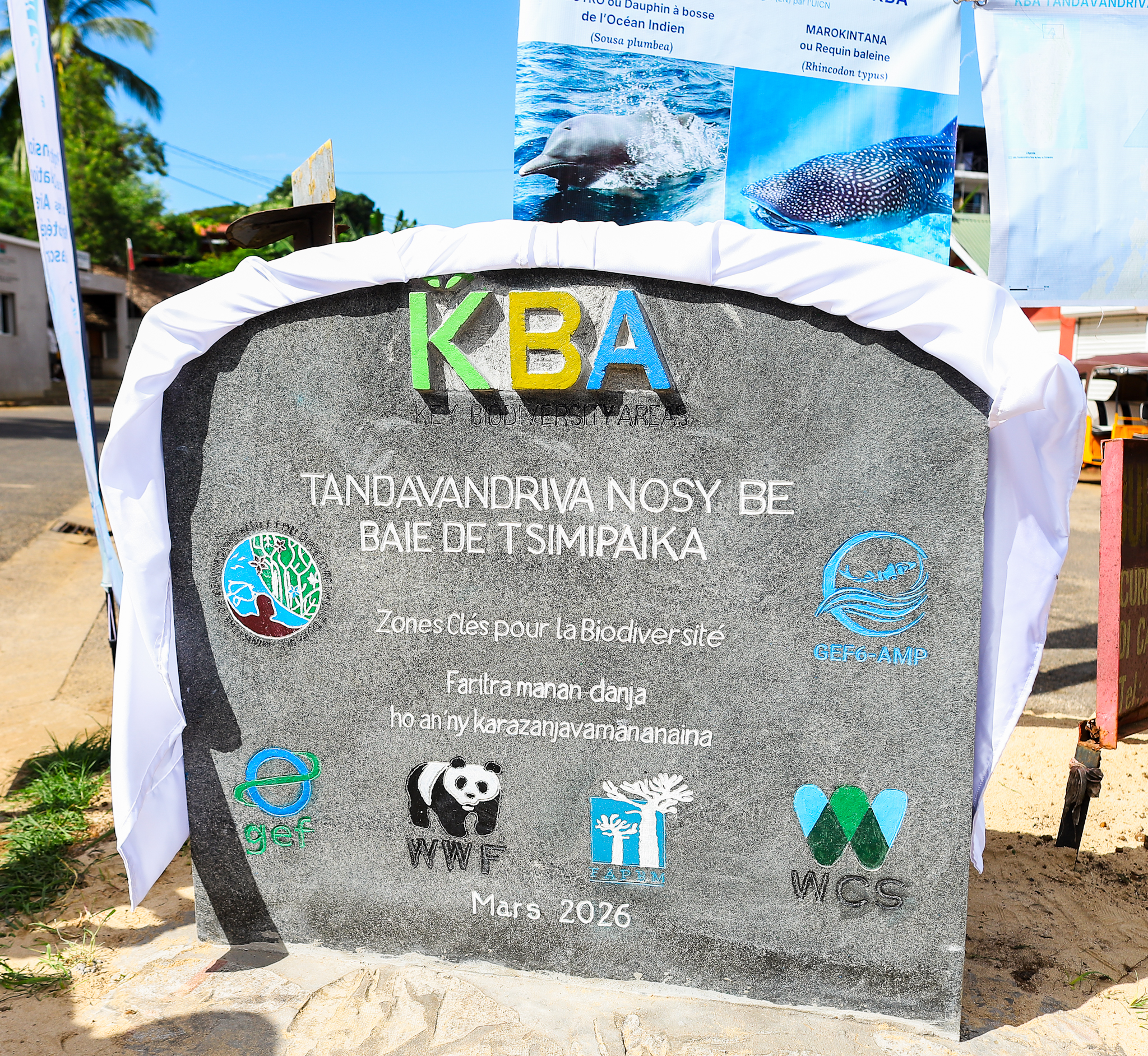
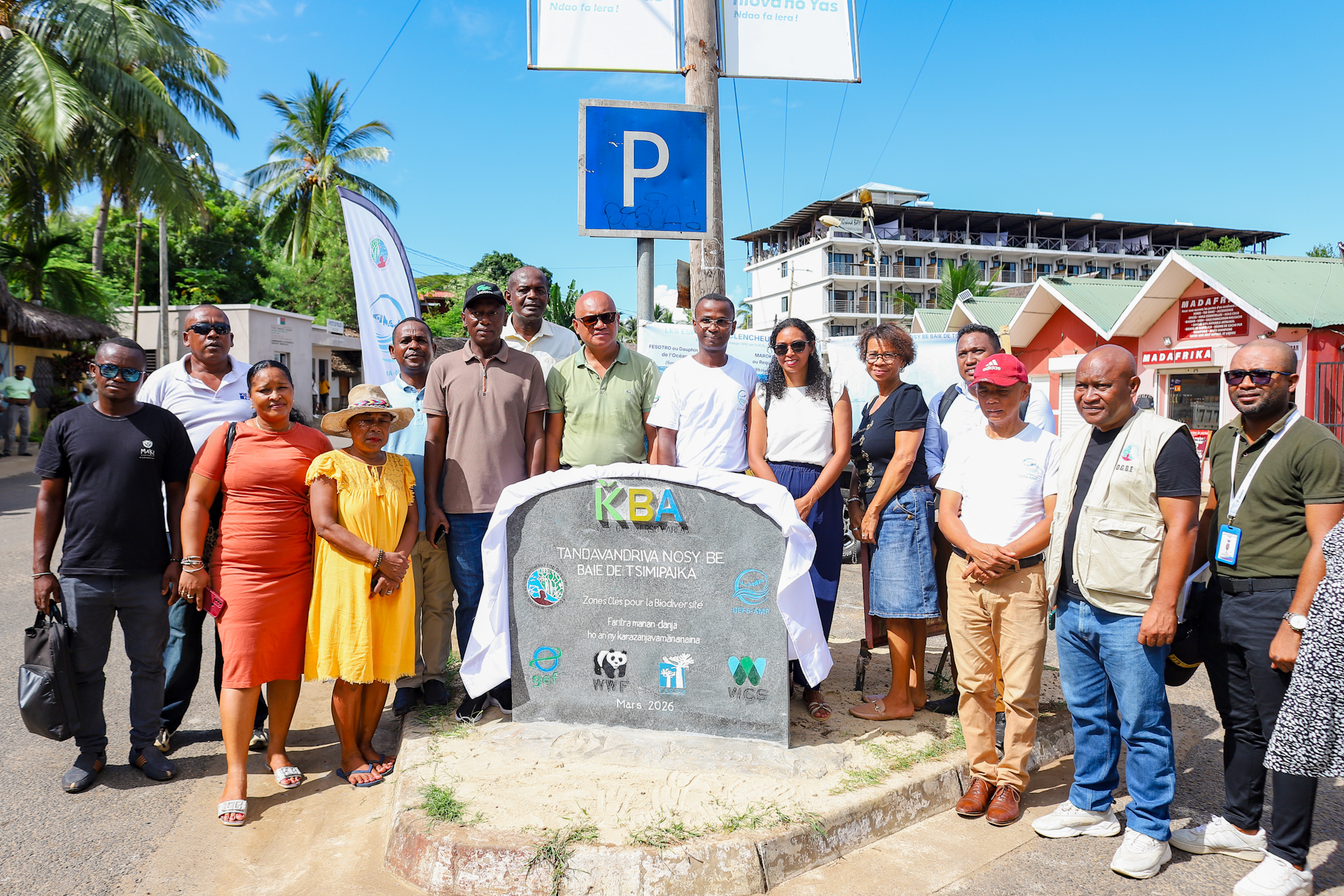
On the ground, three KBA sites have also been officially commemorated through the installation of commemorative steles — a powerful gesture that visibly anchors the long-term commitment of local communities and the State.
This chain of results — from label to MPA, from map to monument — illustrates the operational power of KBAs as a marine conservation tool in Madagascar.